Navigating Evolving Family Wealth Dynamics

For decades, globally mobile wealth has tended to follow a relatively predictable set of drivers, including political stability, legal certainty, access to global markets, quality of life and favourable tax environments.

5 Jun 2026
A smiling man walking through a corporate office space with colleagues in the background.

Today, however, the equation is becoming significantly more complex – in particular as governments around the world reassess how internationally mobile wealth is taxed and regulated. The UK’s reforms to its long-standing non-domiciled tax regime are a case in point, but similar dynamics are emerging across multiple jurisdictions.

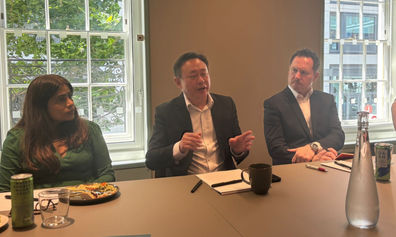
These issues formed the focus of discussions at a roundtable recently hosted by Jersey Finance in London, where wealth advisers explored the future direction of the UK as a global advisory hub and how the movement of family capital is being impacted against this shifting backdrop.

What came across strongly was that this is not simply a tax conversation. Many wealthy families are balancing taxation alongside governance, succession, education, reputational considerations, operational substance and long-term geographic mobility.

As a consequence, for private wealth advisers, family offices and international finance centres (IFCs) like Jersey, this marks the beginning of a new era in global wealth planning. Many internationally mobile families are no longer anchored to a single jurisdiction. Family members, businesses, investment and advisory networks are spread across multiple countries and time zones, creating a more interconnected and operationally complex environment for advisers and families.

Coordination hub

The UK’s reforms represent one of the clearest examples of this shift – and yet, despite the changes, participants at our roundtable agreed that the UK continues to serve as a primary coordination hub for international wealth, with many structuring decisions still being driven from London even where the capital itself is no longer UK-based.

While much attention has understandably focussed on the potential outflow of high-net-worth individuals (HNWIs) and families from the UK, the reality is more nuanced. Wealthy families rarely make decisions based solely on tax. Factors such as education, lifestyle, political stability, business opportunities, legal infrastructure and access to global capital markets continue to play a significant role.

The UK, and London in particular, continues to retain a concentration of expertise that few financial centres can replicate.

London remains a global hub for private banking, alternative investment management, philanthropy, professional services and cross-border deal-making, while its legal system, financial services ecosystem, global connectivity and depth of advisory capability continue to attract entrepreneurs, investors, family offices and internationally mobile capital.

Evolution

In many respects, the UK’s position within global wealth is evolving rather than diminishing.

Families may spend less time physically resident in the UK, diversify residency arrangements more broadly or reconsider certain holding structures, but many will continue to maintain substantial commercial, educational and investment ties to London.

Instead of functioning purely as a destination for wealthy families, the UK is increasingly a centre for active capital deployment, entrepreneurship and sophisticated international structuring. Today, London’s role is less about serving as a permanent home for globally mobile wealth and more about acting as the intellectual and advisory centre through which international structures, investments and governance arrangements are coordinated.

At the same time, jurisdictions such as Jersey continue to play an important role in facilitating these international capital flows through their focus on stability, governance and regulatory certainty, supporting clients’ increasing prioritisation of substance, resilience and long-term stability.

Mitigating complexity

Jersey has played a significant role in supporting UK and international private wealth through trusts, foundations, family office services, fund structures and cross-border administration for many decades – and that role is now evolving in response to these changing patterns of wealth mobility.

In this new world of complex globally mobile wealth, transparency, substance, compliance and international cooperation have become increasingly important. In a period marked by geopolitical uncertainty and rapidly evolving tax regimes, predictability and institutional trust are becoming increasingly valuable attributes.

Many clients now have interests that span multiple jurisdictions and tax regimes; they hold diverse assets including private equity, real estate and digital assets; they operate businesses; they pursue philanthropic strategies; and succession planning is becoming more intricate as intergenerational priorities evolve and younger family members adopt more international lifestyles.

Against that backdrop, families are seeking structures that reduce multi-jurisdictional friction and that provide flexibility, governance, global reach, clarity and long-term resilience.

This is where Jersey’s combination of stability, expertise and international connectivity becomes increasingly relevant.

In relation to the UK’s evolving family wealth dynamics in particular, Jersey has a significant role to play, continuing to facilitate substantial pools of international capital into UK real estate, infrastructure, private equity and operating businesses – acting as a critical part of the broader ecosystem that supports the UK’s international financial connectivity.

As wealth mobility continues to evolve, that interconnected ecosystem will become even more important.

For modern families, conversations are less about simply relocating permanently to a single jurisdiction and more about multiple residences, diversified asset exposure, international family structures and global advisory networks.

As global wealth becomes more international, mobile and interconnected, trusted international finance centres such as Jersey will continue to play an important role alongside advisory centres capable of combining expertise, stability, connectivity and long-term trust.

London and Jersey each play distinct but complementary roles within that ecosystem, and in an increasingly fragmented world, those interconnected relationships are likely to become more important than ever.

Key Contact