Capital, Growth and Resilience for Saudi Family Enterprises

A post-event report from the Saudi British Joint Business Council and Jersey Finance roundtable held in London on 1 July 2026

20 Aug 2026
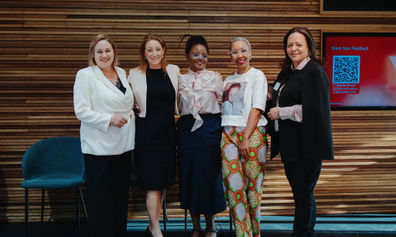
Photograph from roundtable event
Perspectives from the table

Discussions on Saudi Arabia’s investment outlook covered how uncertainty has slowed capital flows, while property, digital assets and UK–GCC trade creates significant opportunities.

Diversification of assets and structures

Gulf families are increasingly diversifying assets across jurisdictions, structures and portfolios as regional economies move beyond oil and gas.

Governance and the next generation

Greater input is given to professional advisers than in the past, though decision-making authority still tends to rest with key family members.

Asset protection and the case for certainty

Asset protection has become a persistent feature of client conversations in the current geopolitical climate.

Shari’a-compliant structuring

Growing demand from Saudi families for bespoke Shari’a-compliant structures rewards cultural understanding, with Jersey offering considerable specialist expertise and flexibility.

The UK political and fiscal environment

Saudi investors seek clearer UK tax policy, while Jersey structures provide secure access to the UK’s investment management expertise.

The non-domicile regime and the UK’s standing abroad

UK tax changes are reshaping Saudi and Gulf families’ decisions, highlighting the importance of policy clarity and stronger regional engagement.

Resilience in portfolio construction

Saudi investors are prioritising resilient, diversified portfolios, while two-way UK–Saudi capital flows create opportunities in property finance and investment management.

Executive summary

The Saudi British Joint Business Council (SBJBC) and Jersey Finance held an invitation-only roundtable at Michelin House, London, on 1 July 2026, bringing together senior representatives from investment firms, holding companies, financial institutions, family offices and professional advisory firms. Around 20 organisations joined virtually from Saudi Arabia and elsewhere. The discussion was held under the Chatham House Rule, and contributions are therefore reported without attribution to individual participants or their organisations.

The discussion examined how investors and business leaders are approaching capital allocation, governance and long-term value creation amid shifting market conditions. Several themes recurred throughout the morning. Gulf families are increasingly diversifying both their assets and the structures that hold them. Family governance is becoming more professional as a new generation assumes defined responsibilities, while demand for Shari’a-compliant structuring continues to grow.

Participants also returned repeatedly to the importance of jurisdictional certainty in wealth planning. On the UK side, discussion focused on political change and the 2025 reform of the non-domicile regime, which several attendees identified as the single greatest deterrent to Gulf capital’s presence in the UK. Stability, in the words of one participant, was the key word of the day.

Introduction

The roundtable marks the second consecutive year in which SBJBC and Jersey Finance have collaborated in this format, reflecting the wider sustained engagement between the UK, Jersey, and the Gulf. Jersey Finance opened by outlining its two functions: working with industry, government, and the regulator in Jersey to ensure Jersey remains a jurisdiction in which people want to do business and promoting Jersey as an international finance centre (IFC) of excellence across strategic markets worldwide, with Saudi Arabia highlighted as one of their key markets.

The session was framed as an open conversation led by the interests of those in the room rather than a formal panel, and each participant was invited to identify one challenge or opportunity affecting the UK–Saudi–Jersey investment corridor before the discussion began.

Perspectives from the table

Uncertainty underpinned most of the challenges raised. One participant questioned whether Saudi Arabia would continue to attract capital at current levels, or whether investors might redirect funds towards the UK and Europe if those markets come to be viewed as more geopolitically stable.

Another, advising on capital flows from the Middle East into the UK and US, described an investor base willing to commit in principle but reluctant to transact while regional and global uncertainty persists. Participants reported a slowdown in decision-making on capital allocation out of the Middle East this year and observed that enquiries for international company formation remain strong. However, pipelines are moving more slowly than before, with an expectation of renewed momentum in the autumn.

Concern was also raised over continuing political debate surrounding UK taxation and the potential impact on inward investment. More broadly, stability was repeatedly identified as the quality clients felt was currently lacking and most wanted restored. Participants also pointed to the pace of policy change between the UK and Saudi Arabia as a challenge in itself, requiring constant work to ensure that all parties understand the changes and are positioned to adapt.

Alongside these concerns, participants pointed to a range of opportunities across the corridor. Those active specifically in UK real estate reported a substantial increase in capital entering the UK over recent months, for investment purposes and for holiday homes. One participant described current conditions elsewhere in the Gulf as creating opportunities for buyers and reported a surge of enquiries following the recent developments in the Saudi property market for international buyers, particularly from the Muslim diaspora in the UK and Europe looking to invest, settle, and open businesses in the Kingdom. Participants noted that access remains conditional, with defined geographic zones, buyer eligibility criteria and registration requirements still in place, including specific conditions applying in Makkah and Madinah.

Participants working in digital assets argued that Saudi Arabia has an opportunity to establish itself in the sector while the UK, US, and EU wrestle with regulation. With Abu Dhabi, Dubai, and Bahrain already active in the sector, they noted there remains scope for new entrants to establish a position. Other opportunities included growing investor interest in nuclear fusion and advanced technologies, as well as helping clients better understand genuine diversification of income and portfolio construction. Participants also noted that, despite recent travel disruption, engagement with the region is expected to resume in earnest from October.

Among the opportunities raised, the UK–GCC Free Trade Agreement featured prominently in contributions from both sides of the table. One participant suggested that ratification, if it coincides with a period of political stability, would quickly restore trade to its previous trajectory. Participants from Jersey highlighted that the Island has secured day one participation in the agreement for goods and services, a first since Brexit, and outlined a wider programme of bilateral treaty negotiations across the Gulf, with a double taxation agreement ratified with Bahrain earlier this year, discussions underway with Saudi Arabia, and negotiations progressing with Oman and Kuwait ahead of the UAE and Qatar.

A recently published review of Jersey’s future competitiveness has recommended that the Island deepens its relationship with the GCC, reflecting the view that an emerging trade corridor will grow in the years ahead, and views were invited from the room on how best to develop it.

Diversification of assets and structures

Jersey Finance opened the discussion by observing that the diversification of Gulf economies away from oil and gas is increasingly reflected in the approach families take to their assets, including where and how they are structured. Families are increasingly seeking geographical, structural and portfolio diversification rather than concentrating assets in a single jurisdiction.

One participant described a marked change among client families historically concentrated in real estate. Conversations that were once limited to property are now extending to diversified investment portfolios and, increasingly, to the structures that hold those assets. Reviews of overall wealth arrangements that clients previously deferred are now actively requested, particularly as family circumstances evolve and conversations once considered too sensitive to raise have become considerably easier to hold. Private client practitioners echoed the pattern, cautioning that structures suitable a decade ago may no longer be fit for purpose. Changes in government policy, tax legislation, and family residence can make previously appropriate arrangements ineffective or, in some cases, counterproductive. Participants also characterised the deliberate pace of decision-making in the region as a strength rather than an obstacle. Families were seen to place significant value on relationships, trust and understanding before committing to a course of action.

Governance and the next generation

Asked whether diversification extends to decision-making, and whether families show greater appetite for non-family professionals to challenge investment decisions, practitioners described a market transformed from 15 years ago. Greater input is given to professional advisers than in the past, though decision-making authority still tends to rest with key family members.

The clearer change lies within families themselves. The next generation, typically very well educated, is taking up defined specialisms rather than the generalist roles of the past, and allocation decisions once held by the founder on a relationship-driven basis are increasingly consolidated in family members primed for specific responsibilities and entrusted accordingly, with roles built across family governance in a more specialised way.

Asset protection and the case for certainty

Asset protection has become a persistent feature of client conversations in the current geopolitical climate, with practitioners reporting the same questions on stability being asked across markets. Practitioners described increasingly sophisticated discussions about control in wealth structuring, driven partly by geopolitical concerns, and identified Jersey as one of the jurisdictions leading the way in flexible structures that allow control to be handled in a deliberate and bespoke manner.

Jersey Finance noted that similar conversations on diversification and asset protection are now taking place globally, including in the United States. It also stressed that no single jurisdiction provides every solution. Collaboration between jurisdictions, with different structures sitting in different regions as part of a bespoke arrangement, has become the norm.

Turning to the question of certainty versus complexity, Jersey based practitioners described certainty as a key reason clients choose the Island, citing legal certainty, political stability, and tax neutrality. The core components of Jersey’s proposition, its companies, trusts, and tax-neutral framework, have remained consistent for over 60 years while the tools have been steadily refined. Jersey’s court infrastructure also provides clients with confidence in predictable outcomes should they need to enforce their rights.

Practitioners highlighted that solutions for asset protection, estate planning, and philanthropy can be made as simple or as sophisticated as a client requires, and examples were cited of philanthropic structures established for clients from the Kingdom holding assets outside Saudi Arabia, and of infrastructure within the Kingdom ultimately held through a Jersey foundation.

Shari’a-compliant structuring

Participants emphasised that Shari’a principles sit at the heart of many family investment decisions and must be kept in mind in any discussion of asset protection and structuring. Practitioners described advising Saudi families on bespoke Shari’a-compliant structures involving Shari’a scholars, appropriate governance provisions and frameworks tailored to individual family requirements. They also reported growing demand for this level of Shari’a compliance.

Asked whether structuring a product as Shari’a-compliant reduces its return potential, participants pointed to hybrid arrangements developed over two decades of GCC investment into the UK through Jersey, in which conventional funding sits alongside Shari’a funding within an orphan structure. They noted that Shari’a funding can carry additional costs compared with conventional funding, although in their experience these can generally be reflected in financial models without materially affecting investor appetite. Participants with experience of Shari’a-compliant retail funds said that the market has needed such vehicles, that they are becoming easier to establish, and that where dual structures are run by a capable investment manager, the difference in cost between the two is modest when they are managed effectively.

Participants widened the point, observing that Western firms across industries have often been reluctant or slow to adapt to cultural and religious nuances in the region, and that clients respond poorly to being told a standard structure is all that is available. Firms that seek to understand those nuances and propose alternative solutions earn a degree of comfort and trust that standard offerings do not.

Jersey practitioners agreed that there is a cultural learning curve to these structures but noted that the Island holds substantial expertise in managing it, and that the additional compliance involved narrows the pool of investors for a given product rather than weakening its competitiveness.

The UK political and fiscal environment

Discussion turned to the UK’s evolving political environment and what the implications for Saudi investment were. A note of caution was sounded when interpreting media reporting, noting that comments attributed to political leadership contenders on capital gains tax and a potential wealth tax had not always reflected the original statements.

One participant offered a candid assessment. While the UK remains one of the few democracies in the world that still functions, its turnover of Prime Ministers has  contributed to a degree of political instability that is unhelpful to the economy. Additionally, they suggested that the government had limited scope for tax cuts and expected continued pressure on the UK’s fiscal position. Another suggested that foreign investors were unlikely to be targeted directly, but considered property taxation a possible area for further policy change.

Asked how the UK might improve perceptions of uncertainty among Saudi investors, participants converged around a small number of consistent themes.  Greater political stability, including greater continuity among the Prime Minister and senior ministers, was seen as more important than any single policy intervention. The pre-budget speculation of the past two years was described as damaging in itself, regardless of the eventual content of the budgets.The broad view was that  a period of greater tax and policy stability would help investors become comfortable with the rules and make decisions with greater confidence.

Several participants argued that the UK’s position is better than its own conversation suggests. The country remains a stable place in which to invest, its taxation is sensible if not low, and its situation is comparable to that of many other countries, yet the British  tendency to publicly scrutinise domestic challenges can sometimes create a more negative perception than the underlying reality warrants. One practitioner cited a client in the region who values the UK precisely as a democratic force, and a cultural change in how the UK talks about itself was suggested as part of the answer.

Others took a more guarded view, arguing that recent and current governments have  contributed to a less business-friendly environment, making the UK a more challenging proposition for investors. However, they drew a distinction between investing in UK businesses, which they approach with caution, and the continuing strength of the UK’s investment management industry. Participants described the UK as one of the world’s leading investment management centres, with significant expertise concentrated in London, Scotland and elsewhere across the country. One approach described for Saudi families pairs the security of a trust structure in Jersey with access to global investment strategies managed from the UK, positioning the UK as an international investment hub rather than solely a domestic market.

Modern offices in London

The non-domicile regime question and the UK’s standing abroad 

Of all the topics raised across the morning, none drew stronger views than the reform of the non-domicile regime introduced in April 2025. Participants described the example of a Gulf family resident in the UK, with significant real estate holdings and other investments, that had relocated entirely to another European jurisdiction. This was said to be one several comparable cases, with other families disposing of UK assets and property holdings.

UK tax practitioners acknowledged these concerns, describing the UK’s Foreign Income and Gains (FIG) regime for new arrivals as too short to accommodate the long-term planning needs of internationally mobile families. Changes to the inheritance tax treatment of internationally mobile individuals, including the introduction of a residence-based test for worldwide assets, were also widely regarded as a significant deterrent for some Gulf families considering relocation to the UK.

It was also observed that many internationally mobile individuals are now monitoring their UK residence far more closely than in the past. The current Treasury consultation on higher council tax for high-value properties was cited by participants as another example of what they regarded as mixed policy signals for internationally mobile investors. A family office reinforced these observations, noting that the changes have visibly affected appetite. The ability to spend time in the UK remains important for many Gulf principals, both personally and commercially, yet a growing number are choosing to dispose of second homes and reduce their UK presence.

Participants questioned whether the revenue raised by the reform would outweigh the potential value of investment deterred. Jersey participants reported increasing engagement with UK policymakers on these issues and said that the practical concerns being raised by internationally mobile families were receiving greater attention. Practitioners suggested that a public acknowledgement of the concerns raised would carry an important signalling value even if departed families do not immediately return.

A related problem was identified in how the UK is perceived across the region. Participants observed that social media across the GCC amplifies every negative story from London, so that client conversations now routinely turn to safety in the capital, even though clients are surprised by the facts when presented with them. While social media may not show the entire truth, misinformation, even when not deliberate, can produce powerful results that negatively impact London’s reputation. The UK has historically felt little need for promotion, allowing its record to speak for itself, but participants suggested the time has come for the UK government to coordinate a public relations effort in the Middle East.

Resilience in portfolio construction

Returning to the theme of resilience in the event’s title, participants discussed how portfolios are being built for clients in the region. Some clients and prospects in the Kingdom were said to have had a bumpy journey investing globally, whether through private equity lockups, businesses carrying too much leverage, or positions monitored from afar with incomplete knowledge. The principles highlighted in response were broadly consistent: maintaining liquidity, using leverage cautiously, conducting thorough research, having a clear understanding of underlying holdings, and favouring a more concentrated portfolio in which each position is well understood.

Participants suggested that emerging-market debt can offer opportunities where they believe credit ratings do not fully reflect the strength of an underlying company’s business model or cash flows. Assumptions about US exceptionalism were described as fading, with investors increasingly willing to look elsewhere, and diversification was once again identified as the defining word. With real estate finance, it has been suggested that the generation now taking on leadership of Saudi family businesses, many of whom are internationally educated and increasingly familiar with global markets, were described as receptive to the UK’s approach to real estate finance.

The refinancing of UK property to release capital for investment into Saudi Arabia was described as an emerging pattern following changes to foreign ownership rules in Madinah, with funds moving in both directions along the corridor and Shari’a-compliant lenders supporting the flow. A broader lesson was drawn from the discussion, namely that while the UK is an attractive destination for capital, it also has investment skills to offer. Reflecting that the sentiment in the room was more positive than the slowdown observed on the ground, participants suggested that managers may need to spend more time understanding changing demand in the region and structuring themselves accordingly, rather than assuming the investment offer speaks for itself.

Perspectives from Saudi Arabia

Contributions from participants joining online extended the discussion into the Kingdom’s own capital markets. One highlighted the opportunity to create more institutional-grade investment products over the coming five years. Instruments such as REITs, IPOs and mortgage securitisation were identified as important components in the continued development of Saudi capital markets. Another linked this evolution to governance, observing that the next generation increasingly values sustainability, longevity and flexibility across both family and corporate investments.

Jersey and other well-regulated IFCs are viewed as playing an important role in supporting investment in both directions across the UK–Saudi corridor, providing governance standards and investor confidence for both large-scale developments and smaller projects.

Conclusion

The roundtable closed with SBJBC confirming that the key points raised, unattributed to individuals, will be fed back to the Department for Business and Trade, continuing the Council’s role in channelling member experience into government. SBJBC also offered to facilitate introductions among participants in person and online, with the guest list shared amongst the attendees following the event, and discussions continued over a networking lunch.

Taken together, several broad messages emerged. Capital across the UK–Saudi corridor is available, increasingly sophisticated, and moving in both directions, but it seeks stability, certainty, and structures that respect the cultural and religious context in which Gulf families operate. Jersey’s proposition aligns closely with these priorities, offering political stability, a long-established legal framework and internationally recognised expertise in cross-border structuring while the UK’s ability to compete for Gulf capital will depend on a settled policy environment and a willingness to address the consequences of the non-domicile reform.

SBJBC extends its thanks to Jersey Finance for its partnership in convening the roundtable and to all participants, in person and online, for the candour of their contributions.

Key Contact