Pragmatism in a World Defined by Disruption

29 Jan 2026
The first few weeks of 2026 have seen a continuance of the trends we became accustomed to in 2025 in the macro environment, in particular a tendency towards geopolitical instability.

Developments in Venezuela. Heightened tensions in Iran. Escalating trade wars and tariffs. And an explosive World Economic Forum (WEF) in Davos which has threatened to further question international political norms.

In the past, the WEF has served as a platform to promote collective progress and collaboration. But these are extraordinary times and we have come to expect the extraordinary.

Alongside that, of course are the rapid advancements we are seeing in technology and in particular AI. With financial services firms globally having only really scratched the surface of what is possible in the AI space, acceleration in AI-fuelled change is inevitable in the coming year – and that will bring challenges, in terms of misinformation and fragmentation of information consumption, as much as it will bring benefits, such as productivity gains and new market opportunities.

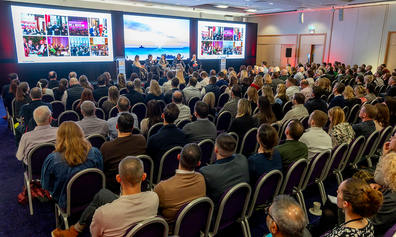
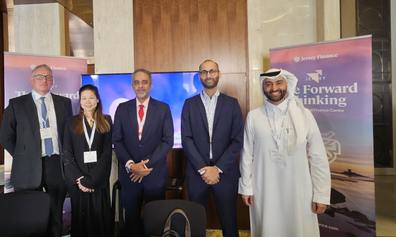
As we discussed recently at our Global Horizons event, all this makes for a world that is defined by disruption and in which certainty is very much in demand – and that has placed a premium on the stable, secure environment Jersey offers as an international finance centre (IFC). But cutting through the disruptive noise will require IFCs like Jersey to be bold, clear and forward-thinking.

Competition

The twin dynamics of geopolitical instability and digital change are still hugely significant in cross-border finance but they are not necessarily new. What has also really come to the fore this year, however, is the heightened competition there is among IFCs.

The UK understands this – already this year, TheCityUK has published a report outlining London’s stature as an IFC, followed up quickly by another comprehensive report looking at the actions required to secure the UK’s future growth as an IFC. It’s no coincidence that UK Chancellor Rachel Reeves’ main message to world leaders and businesses at Davos was the UK’s platform of stability.

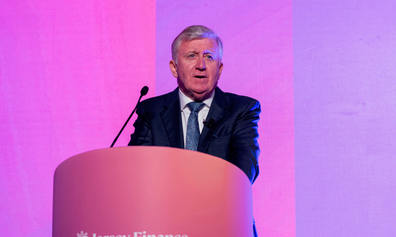
Rachel Reeves and others in a podcast recording booth at the World Economic Forum in Davos 2026Joe Moynihan at a podium speaking at our Global Horizons event

And we are seeing this elsewhere too – in Asia, the Middle East, the Caribbean, Europe, Africa and the Americas– established and emerging IFCs are ramping up their efforts to develop and deliver services to global investors.

They are jumping on AI and responsible automation to drive infrastructure innovation across banking, investment, payments, compliance and risk functions.

They are developing infrastructure to support on-chain solutions that bridge TradFi and digital finance.

They are asserting their ESG credentials to enable a shift of capital from the periphery to core strategic products.

And they are asserting their regtech capabilities around digital finance, data privacy and systemic stability.

The days of waiting for business to come to Jersey are long gone. The reality is that it is now Jersey’s privilege to host and serve high-quality financial flows.

With that in mind, it is really important that as an industry in 2026 we actively work against complacency, leverage our partnerships and adapt where we need to so that we can cut through the competition and continue to attract the high-quality business we want to house.

It will take a two-pronged response – and I’ve blogged before about the importance of balancing our stability as an IFC on the one hand, with a genuine commitment to innovation on the other. In 2026 that approach will be at the forefront of our thinking.

We are in a good place. Jersey has a strong track-record in leveraging its experience to navigate complexity and I’m in no doubt we can continue to do that.

In fact, it’s interesting to note that this year marks Jersey Finance’s 25th anniversary as an organisation. Back in 2001 – when Tony Blair was Prime Minister of the UK – Jersey was the first IFC to establish a dedicated body to support the growth and evolution of the Island’s financial and professional services industry. It was a move based on having the foresight to understand that the world was changing and that as a jurisdiction we needed to be on the front foot.

That culture persists today. Other IFCs have copied the approach, but we, as an organisation, still have a quarter of a century of experience in understanding what it takes to help Jersey’s biggest sector thrive – backed up by an industry that has been supporting global capital flows for more than six decades.

The context today is very different. But our aims are familiar; being proactive in seeking new opportunities and aspiring to be the very best at what we do.

New era

2026 feels very much like a new era for financial services, in which Jersey will need to draw on its experience, expertise and ability to be agile like never before.

We will do that by supporting the ongoing rollout of the Government of Jersey’s financial services competitiveness programme, and our own Vision2050 project, with a focus on talent, innovation, technology and collaboration.

And we will be relentless in our focus on making it easier to do business in Jersey. We’ve seen changes to Jersey’s Trust Law at the back end of 2025, and enhancements to the JPF regime too, while already this year we’ve seen changes to Jersey’s company law, which will make it easier to do establish and use company vehicles, with more regulatory evolution on the horizon.

The indications are good – there were more live companies on Jersey’s register at the end of 2025 than ever before; the number of high-quality family offices establishing in Jersey are on the rise; and Jersey’s funds sector recorded an above-benchmark 5% growth in AUA last year.

As we continue to roll out this programme of change at pace, 2026 looks set to be a year of considerable evolution for Jersey’s IFC. That will enable us to both offer a rare voice of pragmatism in a world of disruption and play a key role in driving progress in the highly competitive IFC space more widely.

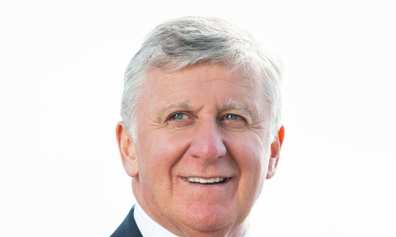
Read more thought leadership from our Chief Executive Officer, Joe Moynihan, in his blogs.