
- Tiller Group Limited
- |1 May 2024
Fintech Spotlight Series: Tiller Technologies
From backlog to breakthrough: How Tiller Technologies is reshaping remediation
15 Jun 2026
Tiller Group Limited
Tiller Technologies is a private company founded in 2016 with offices in Jersey and London. We are AML and E-ID specialists, offering solutions that are user-friendly, innovative, and convenient, making them reliable and effective for businesses seeking to streamline their digital services while maintaining high compliance standards.
View profileAsk any compliance officer in financial services about remediation and you will likely get the same answer: it is one of the most resource-intensive, deadline-sensitive and operationally fraught exercises a firm can undertake. Large volumes of client records need refreshing, documentation needs chasing, data needs validating, all while staff capacity remains finite and regulatory expectations remain uncompromising.
For firms operating across international markets, the pressure compounds. Client bases are geographically dispersed, contact information is often outdated and response rates can be stubbornly unpredictable. The traditional approach which involves individual outreach, fragmented communications and manual rekeying of data is no longer viable at the scale many organisations now face.
Remediation, in short, has evolved from a compliance exercise into a test of operational capability. It is precisely this challenge that Jersey-based Tiller Technologies has built its flagship product, Verify by Tiller, to solve.
A case study worth noting
The clearest illustration of what Verify by Tiller can deliver comes from a remediation programme the firm conducted for a global investment firm managing a network of directors and investors across multiple jurisdictions. The scope was significant: achieve a full refresh of customer due diligence records within a compressed timeframe, while minimising the internal resource required to do so.
The results were striking. Using Verify by Tiller, the programme achieved 95% completion within the first month and 100% by the second, managed in its entirety by a single compliance officer.
That last detail is worth pausing on. A large-scale, multi-jurisdictional remediation exercise, completed to full regulatory standard, by one person. It is the kind of outcome that reframes what is operationally possible, and it reflects the extent to which thoughtful automation and workflow design can reduce dependency on manual resource.
Client adoption was also strong. Despite the time pressures often associated with high-net-worth client groups, participation in the digital process was very high, a result that speaks not only to the efficiency of the platform, but to the quality of the client-facing experience it delivers.
95% complete in month one
100% complete in month two
1 compliance officer managed it all
The problem with the traditional approach
To appreciate why results like these matter, it helps to understand the challenge Tiller Technologies is working against.
Historically, remediation programmes have been resource-heavy by design. Compliance teams contact clients individually, request documentation, manually process responses and reconcile data across multiple systems, often simultaneously. At smaller volumes, the model is workable. At scale, it breaks down. Delays accumulate, administrative costs escalate and the risk of inconsistent data handling grows with every additional case.
The consequences of getting it wrong are significant. Incomplete or inaccurate records expose firms to regulatory sanction. Slow processes frustrate clients. And stretched compliance teams, diverted into administrative tasks, cannot give appropriate attention to the higher-value analytical work that actually requires professional judgement.
The industry has long recognised the problem. What has changed is the availability of technology capable of meaningfully addressing it.
How Verify by Tiller works
Verify by Tiller is a fully integrated Client Lifecycle Management (CLM)/AML platform built specifically for regulated and supervised industries. Its three core modules – Screening, Verifying and Monitoring – operate as a single end-to-end solution, supporting every stage of the customer lifecycle from initial onboarding through to periodic review.
For remediation specifically, the platform introduces automation at each stage where manual effort has traditionally dominated.
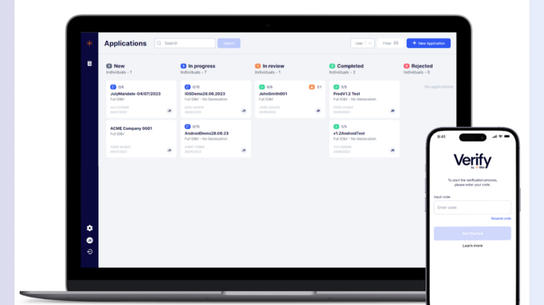
‘Bulk Upload’ is where most client programmes begin. Rather than initiating individual verification requests case by case, administrators upload client records and dispatch outreach requests simultaneously across the entire client base. What would previously have taken weeks of administrative preparation takes hours.
From there, the process segments intelligently. Clients with email addresses are directed through a fully digital journey, receiving secure verification requests and completing checks via Verify’s mobile app in a matter of minutes. Clients scan their ID document, complete a biometric passive liveness check and verify their address without needing to attend a branch or post anything. Automated reminders keep engagement on track without adding administrative burden.
For clients without digital contact details, a parallel pathway activates. Address verification tools validate available records, after which postal outreach is issued incorporating QR codes that connect clients into the same digital workflow. The process adapts to the data available, rather than requiring clients to adapt to a single rigid channel.
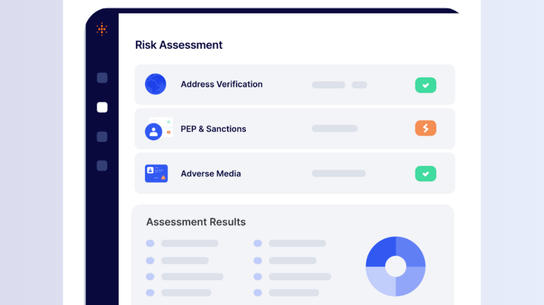
On the administrator side, progress is tracked in real time. Integrated checks, including adverse media screening and mortality verification (where available), run automatically as data is submitted. Items requiring human review are flagged clearly, allowing compliance officers to apply professional judgement where it is genuinely needed, without being buried in routine processing.
Once a case is complete, Verify generates a comprehensive, audit-ready PDF, covering all checks performed, data sources consulted and administrative notes, providing the kind of evidenced record that satisfies regulatory scrutiny.
Measurable outcomes, not just efficiency claims
The shift from manual to digital remediation is not simply a matter of process elegance. It produces measurable differences in outcomes.
Scott Le Flour, Director and Founder of Triskele Solutions, captured the operational impact directly: Verify proved to be a “game-changer” for a tight-deadline remediation project, enabling the team to focus on higher-value tasks and ultimately allowing the project to be delivered “at a more favourable price for the client due to the speed at which matters could be resolved.”
Jacques Colley, Managing Director at Horsepool Group, reported that Verify more than halved the time his team spent exchanging documentation with clients, reducing cost, effort and back-and-forth for end users at the same time.
These outcomes point to something important: client experience and compliance efficiency are not in tension. A process that is faster and clearer for the client is also one that is completed more quickly and more reliably for the firm.
Built for Jersey’s regulatory environment
Verify by Tiller’s relevance to Jersey-based firms extends beyond its general capability. The platform is aligned with regulatory frameworks, including the standards set out in the JFSC’s handbook. These credentials carry particular weight in a jurisdiction where regulatory expectations are exacting and the consequences of falling short are significant.
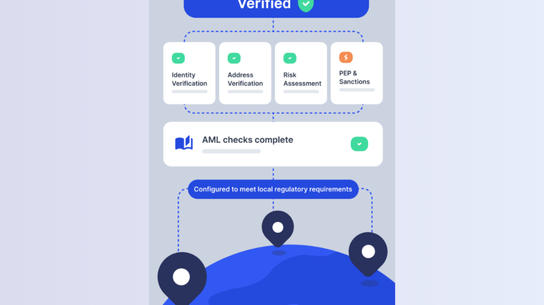
The platform supports ID verification across 186 countries and address verification across 53, using NFC chip reading and airport-grade biometric facial recognition. For trust and fund administrators, financial services firms, legal practices and accountants managing internationally dispersed client bases, this coverage is a necessity.
Configurable templates allow verification requirements to be tailored by client type or risk rating, maintaining consistency while accommodating complexity. The monitoring module enables automated triggers for document expiry and periodic review, removing the manual follow-up that so often causes programmes to stall.
Jersey fintech, solving real problems
Tiller Technologies is, in many respects, representative of where Jersey’s fintech ecosystem is heading, towards practical, deeply considered solutions designed for the operational pressures that regulated firms actually face.
The compliance challenges driving demand for better remediation tools are not going away. Regulatory standards continue to evolve, client bases continue to internationalise and the volume of records requiring periodic refresh will only grow. Firms that approach these challenges with manual processes and fragmented workflows will find themselves increasingly constrained, in terms of cost, capacity and their ability to meet regulatory expectations.
The work Tiller Technologies is doing with Verify offers a concrete alternative: remediation programmes that are faster, more consistent, more cost-effective and more capable of delivering verifiable compliance outcomes, managed with a fraction of the resource historically required.
That is not a marginal improvement. It is a meaningful shift in what the compliance function can achieve.
To learn more about Verify by Tiller, visit tiller-verify.com or get in touch to arrange a demonstration.
Latest news

- Tiller Group Limited
- |2 Feb 2026

- Tiller Group Limited
- |23 Apr 2026

- Tiller Group Limited
- |14 Jul 2023
Key Contact
Related Insights

- Jersey Finance
- |17 Sep 2026

- Jersey Finance
- |17 Sep 2026

- Fiduchi Limited
- |16 Sep 2026

- Jersey Finance
- |16 Sep 2026

- Jersey Finance
- |10 Sep 2026

- Jersey Finance
- |9 Sep 2026

- Jersey Finance
- |9 Sep 2026

- Jersey Finance
- |9 Sep 2026

- Jersey Finance
- |8 Sep 2026