- Jersey Finance
- |4 Jun 2026
Sustainable Finance Podcast: Building Momentum Through Action
Listen in for the latest news in in sustainable finance.
30 Jul 2026
Listen to the podcast
Read the transcript for this episode
Tom McKenna: Welcome to Jersey Heard, the Jersey Finance podcast. I’m Tom McKenna, Sustainable Finance Lead at Jersey Finance, and for this podcast, I’m delighted to be joined by Jessica Skedd, Senior Policy Manager for sustainable finance at TheCityUK. Welcome, Jess.
Jessica Skedd: Morning, Tom. Lovely to be here.
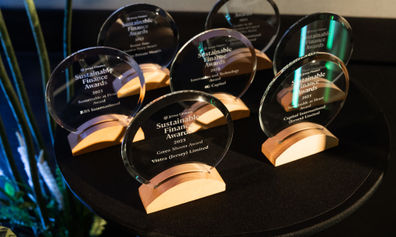
Tom McKenna: During this podcast, Jess and I will be exploring the growing momentum behind sustainable finance and the trends driving its continued evolution, including significant initiatives and events that myself and Jess have contributed to and attended recently. But the first thing I’m going to talk about is Jersey Finance’s Sustainable Finance Awards, which clearly demonstrated the incredible energy of our international finance center for sustainable finance.
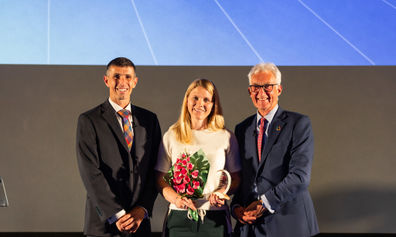
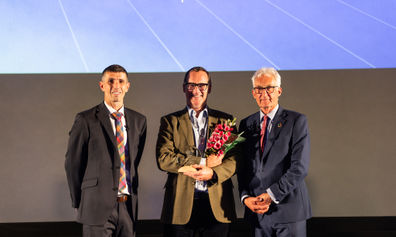
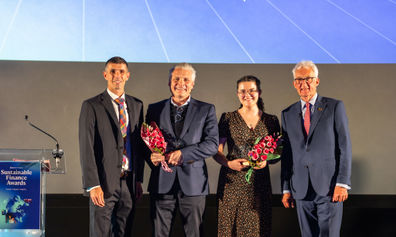
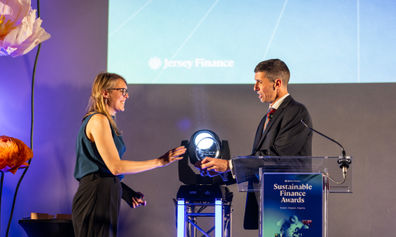
Our awards ceremony took place on the 30th of April, and one of the things we wanted to show was the progress, energy and practical action in sustainable finance that is taking place here in Jersey. It smashed our records for attendance, registrations and entries per award over all of our previous sustainable finance awards to date.
We’ve now received case studies from all our winners, which we have started sharing with industry, and now we’re working on collating case studies from all those others who submitted entries. They may not have won, but some were very close and there were some incredible stories to be told. Industry is really driving us forward in sustainable finance. However, partly because of greenhushing, it’s all happening a little bit more subtly and quietly, contributing to some not appreciating the extent to which it is happening. The awards ceremony and then these case studies really help bring these efforts to light.
Now, moving on from our awards ceremony, Jess, it was great to see you at the Global Ethical Finance Initiative. I’m just going to refer to that as ‘GEFI’ from now on. It’s a bit of a mouthful. And then the week after, I know you were at the London Climate Action Week. We’ll hopefully get onto these events later, but my first question to you, Jess, is from where you sit at TheCityUK, together with your attendance at such important events, how would you describe the wider sustainable finance landscape at the moment?
[01:57] Jessica Skedd: Thanks, Tom. Before I jump into that question, I thought it’d be helpful to briefly just give everyone a sense of, of who TheCityUK is and the work that we do. So TheCityUK is a member-based organisation that represents UK financial and related professional services, and I lead our work on sustainable finance, where sustainability is one of our six strategic priorities, with a huge amount of energy and focus going onto that agenda at the moment.
But turning back to your question on the wider sustainable finance landscape, I would say we’re definitely in a challenging landscape, but we’re moving into a more practical phase. So, what we’re really seeing at this point is less focus on ambition and target setting and much more of a focus on mobilising capital and practical solutions being delivered on the ground.
Obviously, there has been a lot of geopolitical uncertainty and rising economic pressures at the moment, which is definitely creating headwinds, but I think that has also sharpened the focus on the importance of energy security, the growing need to address climate adaptation and resilience, and also the opportunity for this to be an area of UK competitiveness and strategic leadership.
So, definitely kind of shifting at the moment, but we’re really seeing kind of continued energy and focus on the sustainable finance agenda. And I’d say a big shift that we’re seeing at the moment is the need to focus on climate adaptation and resilience alongside climate mitigation. This was no more clear than in recent weeks where we’ve been hit with a heatwave and we’re struggling to adapt and cope in London.
So I definitely think that’s being brought to the foreground. And lastly, I definitely would say that what we’re also seeing is that sustainable finance is no longer seen as a niche agenda, but something that is integral to core business. And so increasingly, it’s being integrated as part of business as usual, seen as integral to growth, investment and long-term economic resilience.
So definitely we’re in challenging times, but I think the focus really is on building the structures, the pipelines and the partnerships to deploy capital. And really there is an opportunity for the UK to play a leadership role in that agenda as well.
[04:06] Tom McKenna: There’s a few points that I’d like to comment on. Firstly, apologies for not giving more of a background on TheCityUK because it’s really helpful that you’ve done that. We at Jersey Finance obviously work really closely with you, and we’re proud of our partnership and it’s something we’re really keen to develop. We’re obviously doing a similar role to you, but on a smaller scale here in Jersey, so it’s important that we complement one another’s efforts and work as closely together as we can.
The other thing I was going to touch on was you mentioned effectively that at the moment, it’s more about the doing. And I think that touches on what people were concerned about a lot with the headlines in the EU. Quite a lot of people were concerned if you went back six months that the EU were really scaling back on sustainable finance.
But what we felt it was more of a simplification, so there was less unnecessary regulation so that more businesses could focus on what they really needed to do in terms of sustainable capital, which as you know, is all about the mobilisation of capital to the sustainable development goals.
[05:05] Jessica Skedd: Yeah, definitely. I think I’d really agree with that. I think obviously we have seen shifts, particularly in the EU, with their simplification regime, but I don’t think that necessarily feeds into the wider piece around momentum behind sustainable finance. I think as you say, it’s much more about being able to get on with the doing and kind of really focus on how to mobilise capital and less on reporting and disclosures. We are still seeing developments on that side. Obviously, the UK has made a commitment to introduce UK sustainability reporting standards aligned with the ISSB, so we are seeing progress on that agenda. But I think it’s definitely increasingly being balanced out with a recognition that in order to actually achieve the sustainable development goals, we need to focus on how to get capital into projects and to deploy that at scale. So that definitely seems to be the kind of focus at this point.
[05:58] Tom McKenna: Jess, I’ll come onto GEFI in a bit more detail later, but just some of the things you mentioned there really highlight one of the benefits of GEFI for me in that I find, and I don’t know about you, but it’s really helpful for me because it gives a much more global perspective.
I know certainly in my job in Jersey, and I don’t know about you in London, but we’re so focussed on the Western view, and we almost take that as the world view.
Whereas at GEFI, it’s incredible because they have so many people from all around the world speaking and sharing what’s going on in their jurisdiction.
I know at the last summit a few weeks ago, Japan was cited throughout. For example, their sustainable assets under management have tripled in the last few years and they’re now a clear leader in transition bond issuance. It was also highlighted during the GEFI summit, and this was certainly said to be the case in Japan, that rather than slowing sustainable finance efforts, several of the Trump administration’s actions have in fact inadvertently accelerated progress.
And we’ll try and talk through some examples of this later, but for now, this brings me on to my next question to you. There has undoubtedly been some anti-ESG sentiment in the US, probably a massive understatement. How is the UK conversation developing in comparison?
[07:05] Jessica Skedd: I think definitely it feels as though the conversation in the UK and the debate is much more pragmatic. I think we’re seeing a growing focus on how the UK grows its economy, how we remain competitive and also obviously over recent months, a spotlight has really been shone on energy security, but also affordability and availability. So whilst there is obviously some elements that are being challenged, I think we are seeing a much more pragmatic debate around how do we continue to make progress on the transition while also ensuring that we deliver affordable energy to the public and ensure that our transition is one that generates growth and drives jobs.
What we’ve seen in the UK as well is a real shift towards action and demonstrating outcomes, so a big focus on mobilising investment into clean energy, into infrastructure, and how that can then be a driver for economic growth. And obviously Labor have set their ambition to make Britain a clean energy superpower by 2030 and the government is underway with delivering that agenda, and I think that has really reinforced the kind of direction of travel. It’s an ambitious target, but I think it’s one that has really kind of put the clean energy transition front and centre and demonstrated that kind of through pursuing that agenda, the transition is both an economic opportunity as well as a climate imperative.
[08:30] Tom McKenna: Yeah, and I noticed already during this podcast, there’s two words that you’ve mentioned quite a number of times, which is great to hear. Being practical in our efforts and also the focus on growth.
Jessica Skedd: Yeah.
Tom McKenna: And they’re quite basic words, but they’re so important in the sustainable finance journey, and it ties back to what you said about now it’s more about the doing. So I feel certainly in terms of this growing, conversation and how sustainable finance has been developing over the last 18 months, I know certainly from the work I was doing that at the start of 2025, it was clear that many were hanging on every word of the Trump administration and what was going on in the US. But I feel like day by day this has been diminishing and more drowning out that noise. I think the credibility of that administration is increasingly questioned, as is the level of trust that can be placed with them. So, although it is still contributing to significant difficulties and challenges in sustainable finance, I feel that there are plenty of reasons to be positive.
For example, at GEFI, and this is something you touched on in terms of renewables and clean energy, it was suggested that what is happening in the Strait of Hormuz perversely has been one of the best things in recent times for renewables. And I know at GEFI they used Japan as an example again and they said through what’s happened in the Strait of Hormuz, it’s really accelerated their push for renewable energy, in particular geothermal. Now, if it’s all right, and I know you touched on the UK situation a bit earlier, but we’re going to dive a bit deeper on the UK momentum and the work you’ve been driving at TheCityUK, specifically the International Climate Finance Working Group and the Team UK Playbook.
So Jess, my next question for you is, can you tell me about the International Climate Finance Working Group, including what it is, how it’s run, and why it was created?
[10:10] Jessica Skedd: Thanks, Tom. Absolutely, so, at TheCityUK, the way that we deliver and work with our members is through a series of member groups and committees, and one of those that we set up over the last 18 months was the International Climate Finance Working Group. And we established this group really to provide strategic advice to TheCityUK on policy positions and activity on international climate finance. And this was really born out of our participation and engagement in international climate forums such as COP, and the real recognition that our industry has a really important enabling role to play in mobilising finance and supporting the delivery of the goals of the Paris Agreement. So we established that group to create a stronger mechanism for collaboration between industry and government, recognising that neither government nor industry can deliver progress on this agenda alone, and especially in the context of the agreement at COP29 around the Baku to Belém roadmap and the scaling of finance, and that a huge amount of that finance was going to have to come from the private sector. We thought TheCityUK had a good role to play in coordinating across government and industry and bringing the voice of our industry into those discussions. So, a core focus for that group has been how we can support delivery of the Paris Agreement, in particular, the mobilisation of private capital for climate action in emerging markets and developing economies.
But since COP30 in Belém, we’ve really shifted towards focussing on this piece around collaboration. I think after attending a number of COPs over the last few years, something that we had noticed was there really is a need for strong coordination across government and industry, both in the lead up to these events, but also during these events to really showcase and demonstrate the kind of UK sustainable finance ecosystem and what we’re doing on this agenda, and how we can partner with other countries to drive action and deliver innovative, practical solutions at scale.
So this is what’s led to the Team UK initiative, which you mentioned, which is really centered on aligning stakeholders behind a shared set of priorities and showcasing where the UK has genuine leadership and expertise and with a view to making sure that we are impactful and make the most of the government and business presence at key international moments, such as London Climate Action Week, which only happened a few weeks ago, but also New York Climate Week in the autumn and the annual climate COP as well.
[12:48] Tom McKenna: And Jess, just so I’m clear on one of the points you mentioned then. You spoke about Belém and the importance of collaboration. Is that collaboration mainly focussed on your efforts between the private sector and the public sector in the UK?
[13:00] Jessica Skedd: So I think in terms of collaboration, yes, primarily what we are looking to do from a CityUK perspective is build really effective collaboration between the financial and professional services industry, UK government, and wider stakeholders who are relevant to the work that we’re doing.
So we’ve really been focussing on how we can engage and work with key departments in the UK, such as the Department for Energy Security and Net Zero, as well as the Foreign Commonwealth and Development Office. And obviously, there are a number of other departments that have relevance and are really important for us to engage with.
But alongside that, what we’ve also been trying to do is map key organisations that we can build collaborations with. So that’s also key development finance institutions such as the British Investment International and the Private Infrastructure Development Group, as well as some of the UK’s flagship initiatives such as GFI and others.
So we’re really trying to build, I guess, a coalition of the willing and bring into that room all the voices that we need to hear.
[14:01] Tom McKenna: You touched on Team UK Playbook just then, and just for the sake of the listeners, can you just put it really simply what the Team UK Playbook is and what it will be used for?
[14:11] Jessica Skedd: It was really born out of a recognition that there is a need for a more coordinated voice. The UK is doing a huge amount on sustainable finance.
There are so many different initiatives and activities going on, and we really wanted to bring that all together into one single product that really set out a clear narrative for the UK to ensure that we’re equipped with the tools to effectively communicate at key international moments.
So, fundamentally, it’s a practical messaging framework and it’s built around three areas where we think the UK has strong expertise and really a chance to work with international partners. And some of those are themes that you’ve already touched on, so transition finance being one of those. But the playbook also looks at carbon markets and also insurance adaptation and risk management. And across a number of pages, it brings together key messages, UK initiatives, really helpful stats and evidence to support the narrative that we’re setting out, as well as practical case studies where the UK is already delivering impact.
[15:18] Tom McKenna: And that’s one of the things that really stood out to me from the Team UK Playbook, was the strength of that evidence behind the UK sustainable finance and clean energy story. You touched on a number of times transition planning, growth in the net zero sectors, and also the significant private investment I think as you probably know, Jersey takes a fast follower approach largely due to the size of our international finance center.
And for me, there’s very few better financial centers and jurisdictions to follow than the UK with all their fantastic efforts. For me, despite any anti-ESG sentiment that I touched on earlier, the reality and what makes that anti-ESG sentiment rhetoric almost obsolete is the sustainable finance and particularly net zero efforts increasingly make economic sense. You touched on that earlier, and at the latest draft of the playbook that I saw, I just wanted to highlight and read out two stats from it. The first is that the UK’s net zero sectors grew three times faster than the overall economy in 2024. And the second one was that 70% of the FTSE 100 companies have already voluntarily developed many key elements of a transition plan. So based on what I’ve touched on, how does sustainable finance support the UK’s wider international competitiveness agenda?
[16:30] Jessica Skedd As I think you’ve mentioned, the UK has a world leading financial and related professional services ecosystem. The City of London houses some of the leading banking, insurance, asset management, legal advisory and data services. And, really in terms of how this agenda can support the UK’s wider international competitiveness, I think is kind of touching on points we’ve already spoken around how it can be a driver of economic growth and energy security and also a major opportunity for our leading financial and professional services to act as a hub to facilitate sustainable finance internationally. And I think that point is quite important.
Whilst obviously we have a world leading financial center, a huge amount of that is driven by the fact it’s an international financial center. So taking a leadership role in sustainable finance has a really important role to play in the UK’s wider competitiveness and positioning ourselves as a destination to do business, whether that be transition finance, carbon markets, insurance related products to support risk management and adapt to physical climate change. I think that’s really important and has a huge role to play in the UK’s broader international competitiveness. Alongside that, I think, we’ve touched on the clean energy mission and the focus on reaching clean power by 2030. I think we often say the UK has to show leadership by getting on and doing it itself first and I think that is definitely something that we can see with the clean power mission that the UK is demonstrating by doing. And there’s a lot of potential for the UK to support other markets with their transitions, whether that’s through the Global Clean Power Alliance or the Transition Finance Council. As I mentioned previously, I think this agenda fundamentally feeds into a much broader wider transition of the economy and also of industrial strategy. So, really important not to see it as simply sustainable finance, but part of the wider economic growth story.
[18:40] Tom McKenna: Jess, you made a number of points that we’re going to touch on later on, I’ll hold off on commenting on some of those points, but I’m going to bring us back to GEFI just for a few minutes, if that’s all right.
I know, at GEFI, unfortunately you were only able to be there for the main summit itself. I was lucky enough to stay a bit longer and go to some of the side events. So, I’m just going to give a few snippets on my key takeaways on some of the side events that you were unable to go to. The first event I attended during that week was the SDG Hive event, and perhaps unsurprisingly, there was a lot of discussion on what’s next for the SDGs. Most people understand that the SDG targets unfortunately will not be met by 2030. I think only 17% are on track, and we’ve now breached six of the nine planetary boundaries. If we breach more by 2030, this event was saying that the impacts could be irrevocable. However, in terms of the discussions around the SDGs and what’s next for them, people were saying, in an increasingly fractured world, it is really unlikely that we’ll ever see such global agreements on targets again. I think when they were agreed that all 193 UN member states came to an agreement, which at this moment in time just seems incredible. Yet it was recognised, and it is widely recognised, that the SDGs are far from perfect, i.e., not all sustainable development goals are equal. Tackling ocean-related issues, for example, is extremely challenging at a national level, and with the fragmentation of multilateralism, perhaps goals need to be a bit more localised and focussed on what is most relevant in each place. But overwhelmingly, this event and everyone in there, and it was almost like a round table event, said it’s clear that the aspirations of the SDGs are more relevant than ever. And this is especially true given that some world leaders appear to prioritise themselves rather than their people. But in terms of the next steps, it will be for the UN to decide what to do with them. For example, could they simply extend the target date? But a big challenge, as I’m sure you know, Jess, for the UN is funding, and it’s just not receiving its full contributions at the moment, so it’s making all its efforts incredibly challenging.
The second event I wanted to talk about briefly, and this is all about the efforts in Barbados. The event was a film screening of a film called The Climate Blueprint: Barbados. This film was all about their efforts to fight for international financial reform. So small island developing states such as Barbados are disproportionately affected by climate change and face significant challenges in responding to it. For example, interest rates on international lending can be around four times higher than those faced by Western developed nations, and access to technologies such as electrical vehicles or solar PV panels is also constrained by global inequalities and those countries that have a more dominant position. Despite this, the film really detailed their incredible efforts and is a powerful reminder of what ambition and commitment can achieve in the transition to net zero. And for me, it really puts places like Jersey who don’t have the same obstacles, into perspective. Now, I’m saying this not as a negative on us as an island in Jersey because we are putting a lot of effort in and doing some really positive things, but I see it overall as a positive, and it should be used for inspiration on how much more we can and should be doing. And I’m planning on sharing this film with industry, including at a future sustainable finance leaders event shortly. So Jess, now that I’ve given you a couple of my takeaways, if you had one takeaway from the GEFI Summit, what would it be that you could pass on to the audience?
[22:07] Jessica Skedd I’d say my biggest takeaway was the need to think more holistically and break down silos. Too often we separate some of these challenges into discrete boxes, whether that’s climate, nature, energy security or economic growth. In reality, they are all interconnected and interlinked, and in order to address them we need to solve together. So, I’d say the recurring theme for me was that the climate action agenda should not solely be seen as an environmental agenda.
We’ve spoken about it, and the Stern Review 2.0 that was published last year highlighted this could be the growth story and one of the most defining economic opportunities of the 21st century. So, I think increasingly bringing together the climate agenda with the wider economic growth agenda is important. And that really struck me kind of during the summit where we heard from many different perspectives and leaders across industry who’ve worked in a number of areas, and that need to think more holistically came through very strongly for me.
If you’ll allow me a second takeaway, I think it was also that the challenge is no longer about a lack of ambition or intent. There is a huge amount of ambition, and we’re seeing firms mobilise significant finance and develop very innovative solutions. But the challenge is probably fragmentation. So as you’ve mentioned, we’re seeing fragmented markets, and we’re seeing fragmented approaches. And so how can we bring different actors together to solve these challenges? I think that’s something that struck me and something that we need to think about and hopefully |TheCityUK has a role in supporting.
[23:51] Tom McKenna: Yeah, I should have emphasised this earlier with GEFI, and I don’t know if you feel the same, Jess, but I always leave the summit feeling overwhelmingly positive, galvanised and full of new ideas and things to work on. I’m now going to start wrapping up, Jess. You spoke about the various COPs you’ve been to over the last few years, so I wanted to know, what are your key focusses over the next six months, especially with COP31 on the horizon?
[24:17] Jessica Skedd: I think our key focus moving forwards is really looking towards a busy autumn and focussing on how we can continue to deliver and drive forwards a sustainable finance agenda. We’ve got some really exciting work coming up on the carbon market space, which I think will be really interesting and will continue to drive forwards the Team UK playbook. And then alongside that, obviously the report that we’ve published during London Climate Action Week will be a key focus for us moving forwards as we start to think about how we engage and drive forward some of the recommendations in that report. Overall, I think the direction of travel for the next couple of months is hopefully going to be continued momentum following on from a very successful London Climate Action Week, not just for the City UK, but I think for London more broadly. I think we’ve really demonstrated London’s convening power and leadership on this agenda. So hopefully we’ll continue to see momentum on that. And I am kind of optimistic about the direction of travel for a number of reasons. And largely that’s because of what we’ve touched on during this conversation. As we’ve spoken about, the kind of economics are increasingly aligning with the kind of outcomes that we are trying to achieve, and the investment case has broadened significantly.
So, I think undoubtedly there’ll be challenges along the way as there always are, whether that’s domestically or globally. I’m sure we’ll see some more of those over the coming months, but I think we’ll continue to see a strong commitment from our industry to making progress and demonstrating practical solutions. And I think one of the clearest examples of commitment is probably the kind of success of London Climate Action Week itself. As I mentioned in, in response to my previous question, you know we saw over 1,000 events take place this year, and I think that level of engagement demonstrates the kind of recognition of the importance of this agenda and that it’s kind of a core part of what our industry is focussing on at this point in time.
[26:14] Tom McKenna: So for me, the message from Jersey Finance’s awards, the case studies that we’re producing, from the UK’s activity detailed by Jess and from international forums like GEFI, it’s clear sustainable finance continues to move forward with purpose. And perhaps the biggest ally in the efforts is that it now increasingly makes economic sense to do so. The opportunities are clear and significant. And Jess mentioned this word must be about 20 times at least, ‘growth’. It’s all about growth now.
So I’d like to finish with a request to industry, and that is to step up your efforts to share with us what you are doing. We really want to promote Jersey as a leading sustainable international finance center and in turn contribute to the UK’s efforts.
And to do so, we need to get much better at sharing our stories.
Thank you again to Jess for taking part in this podcast, but also for CityUK’s ongoing efforts in driving forward the sustainable finance agenda in the UK and beyond. If you found this conversation valuable, please share it with someone who needs to hear it and we hope you’ll join us next time.
Thanks for listening to Jersey Heard.
Tom joined Jersey Finance as the Sustainable Finance Lead in April 2023.
Born and educated in Jersey, Tom studied at the University of Chester where he graduated with a BA Hons and MSc.
Tom has over 17 years’ experience in Jersey’s finance industry, having worked as an Associate Director at Zedra before joining Jersey Finance and, prior to that, at EFG. In his role at Zedra, he drove the creation of, and was Chairperson of, their Global Green Team.
Born and educated in Jersey, Tom studied at the University of Chester where he graduated with a BA Hons and MSc.
Tom has over 17 years’ experience in Jersey’s finance industry, having worked as an Associate Director at Zedra before joining Jersey Finance and, prior to that, at EFG. In his role at Zedra, he drove the creation of, and was Chairperson of, their Global Green Team.

Jessica SkeddSenior Policy Manager Sustainable Finance, TheCityUK
Read the case studies from our Sustainable Finance Awards (2025)
- Accuro Trust (Jersey) Limited
- |3 Jun 2026
- Capital International (Jersey) Limited
- |3 Jun 2026
- Affinity Private Wealth
- |3 Jun 2026
- 4G Capital
- |3 Jun 2026
- Capital International (Jersey) Limited
- |3 Jun 2026
- RBS International
- |3 Jun 2026
- Vistra (Jersey) Limited
- |3 Jun 2026