- Jersey Finance
- |6 Mar 2026
Insights From Your 2025 Rising Stars
Podcast episodes
12 Feb 2026
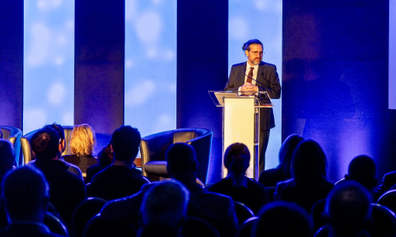
Our Rising Stars Awards celebrate the incredible young talent shaping our industry’s future. Each year, we recognise individuals aged 16 to 30 who go above and beyond in their roles, championing innovation, demonstrating dedication, and bringing fresh ideas and skills into their workplaces.
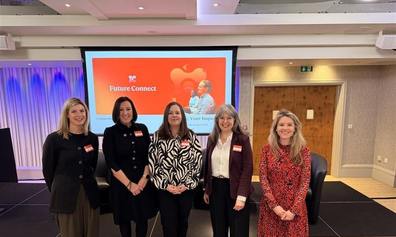
This year, we’re excited to bring you two special podcast episodes featuring five of our award winners. They share their career journeys, proudest achievements, the challenges they’ve overcome, and what being named a Rising Star truly means to them.
Whether you’re just starting out, exploring a future in finance, or looking for inspiration from real role models within the industry, these episodes offer valuable insights from the 2025 Rising Star winners in accountancy, banking, diversity and inclusion, human resources, and law.

Episode One: Counting Success - Jersey’s Rising Stars in Finance
In this episode, we’re joined by our winners from the Accountancy and Banking categories, Oreofeoluwa (Oreo) Agunloye from KPMG in the Crown Dependencies and Dominika O’Dwyer from the Royal Bank of Canada, who sit down with our Head of Marketing, Louise Burrows.
Oreo and Dominika share insights into their roles, what inspires them, and how they see the future of the industry evolving. They talk about the key skills needed to succeed, the challenges and opportunities they’ve encountered, and offer personal reflections on their career journeys so far.
They also discuss the strong presence of women at this year’s event, highlighting how many talented young women were recognised and how empowering it felt to see that representation.
If you’re looking for inspiration to take the next step in your career, want to hear from relatable role models within the industry, or are curious about what it’s like to work in Jersey’s finance sector, this episode is for you.

Oreofeoluwa (Oreo) AgunloyeAccountancy Winner

Dominika O’DwyerBanking Winner
Read the transcript
Louise: Welcome to the Jersey Heard Podcast. I’m Louise Burrows from Jersey Finance, and in this episode we’re bringing you stories and insights that you can use to shape your own career journeys in finance. So whether you’re already in the industry or considering it, you’ll hear from two of our rising stars, who will share their career journeys, the challenges they’ve overcome and why they enjoy working in finance.
Before we kick off, a quick word to explain the Jersey Finance Rising Stars Awards. It’s an annual event we hold each year to celebrate and find exceptional young professionals who are shaping the future of Jersey’s finance industry. So, they’re problem solvers, innovators and rising leaders who are really making their mark.
Both of our guests today are winners of their categories, so let’s meet them. First of all, our banking winner.
Dominika: Hi, I am Dominika O’Dwyer an Associate Director and Relationship Manager at RBC Wealth Management.
Louise: And also joining us today we have our accountancy winner.
Oreo: Hi, I am Oreofeoluwa Agunloye. Everyone calls me Oreo.
Louise: So, both of you work in areas that I’d say people quite often think of as traditional parts of finance, so banking and accountancy.
But we know that the industry has evolved a lot. So, to start us off, it’d be great to hear what does working in finance mean to you personally? What was it that first drew you to your roles and maybe one highlight from your journey so far. So, let’s start with you, Oreo.
Oreo: So, for me, what drew me to accounting was the clarity and structure.
The idea that behind every number is a story waiting to be uncovered, but it was auditing that really lit the spark for me. I love the investigative side of it, asking the right questions, digging into the details and helping organisations build trust through transparency. And one highlight for me would be how KPMG was very nice to recognise me.
Recognise my potential and support me by nominating me for the Accountancy Rising Star Award and ultimately winning the award.
Louise: That’s great. And you can really hear the passion in how you describe accountancy, which is great. And Dominika, how about you?
Dominika: I’ve always known I wanted to work with people, and my role allows me to do exactly that, building meaningful relationships and helping clients achieve their financial goals.
Choosing one highlight is difficult, but I’m afraid I’m going to have to copy Oreo and say that winning the Jersey Finance Rising Star Award for banking has been an incredible moment for me. Especially being able to celebrate that achievement with my team who’ve supported me throughout my journey.
Louise: No, that’s really nice to hear that the the awards have meant so much to you.
And on the human side as well, it’s easy to forget how much that side of things matters. So, it’s a really good point. Why don’t we take that a step further and hear from each of you in turn about your current roles. So Oreo, what is it that excites you the most about working in accountancy right now?
Oreo: Working in accountancy but specialising in audit. So, what excites me most about working in audit right now is how rapidly the field is evolving, especially with the rise of innovation and AI. Traditionally, audit has been seen as very rules-based and retrospective, but that’s really changing. We’re now at a point where technology is transforming from how we work and that’s incredibly energising for me. Tools powered by AI and data analytics, allowing us to not just look at a slice of the data, but now analysing everything in real time and with greater accuracy and insight. I’ll say it’s making audits more efficient, but more importantly, more insightful and forward looking and no one should get scared.
It’s not replacing auditors, but it’s more about empowering us to focus on the areas that really matter. And being part of this transformation, especially at a firm like KPMG, that’s investing heavily in innovation makes me feel like I’m not just witnessing the future of audit, but I’m helping shape it.
And that’s what keeps me motivated every day at work and my cup of coffee.
Louise: I love that example. It really shows the innovation that’s happening in your area. And a really great point too about the need for technology to work alongside people and no, we’re definitely not replacing auditors anytime soon.
Dominika, we talked there a bit about innovation, so can you share an example of an innovation or success that you’ve been involved in?
Dominika: I was recently asked to join the Jersey Wealth Management Association as deputy chair, which is a huge honour. The association promotes the industry and Jersey as a finance centre, and we focus on four main areas.
The one I’m most passionate about is education, and most specifically, I really want to help improve financial literacy and show younger people that wealth management can be such a dynamic and a rewarding career. So, it’s exciting to play a small part in inspiring the next generation.
Louise: That’s a great example, and it really brings it to life how these awards fit into our wider strategy at Jersey Finance to do with skills and education.
So, let’s talk a bit more then about skills and career growth, because as we’ve just said, finance moves really fast. It’s actually a really exciting, competitive industry and it’s always changing. So, thinking about education and skills and when you think about the next wave, the next generation of talent coming through, what are those skills that they’re going to need to thrive?
And Dominika, maybe, maybe you can kick us off and then Oreo, I’d love to hear your take on it too. So, what skills then are essential to succeed in your field today?
Dominika: For me, the three big ones are agility problem solving and most important one, I think personality. You have to be adaptable because things change so quickly in finance. Problem solving is key to turning challenges into opportunities. And personality, that’s what builds real relationships, whether that’s with clients or colleagues.
Louise: Fascinating, and I think personality is a really interesting one, and it’s not something that people outside of the industry would, would necessarily pick up first.
Oreo, what do you think?
Oreo: I think just to add, I would say digital fluency. Just not being stuck in the old technology now realising that technology is very useful. Communication skills as well. So like she said, with personality, being confident, being able to stand in front of a room and just give a talk or give a speech.
And I would say ethical decision making, being trustworthy, having integrity and yeah, just being someone that is reliable.
Dominika: So, we’re not boring Mathematicians in finance at all.
Louise: Definitely. And again, we hear from our students that, “oh, I’m not very good at math, so I can’t come into the finance industry.”
And of course, there’s roles where, where mathematical skills are going to be important, but it’s absolutely those other things that you mentioned that go alongside it.
So thinking then you’ve already mentioned some of the things that are going to change in the next few years, but how do you see your roles evolving over the next five years and changing?
And maybe Oreo I’ll come to you first.
Oreo: Yes. So as said earlier, I would say greater integration of technology and also a good focus on ESG and sustainability.
Louise: And Dominika. What’s going to change in, in your role?
Dominika: I mean, with banking and accountancy there is definitely a lot of overlap. So I think we’ll continue to see higher standards across regulation, client expectations as well and sustainability goals.
And as Oreo said, at the same time, AI and digital tools will have an enhanced role in how we work, enhancing efficiency and freeing us to focus more on a human side of client relationships, which is where we add the most value, I think.
Louise: Yeah, absolutely. So, what advice then, would you give to someone who was sort of five, six years, your junior and, and just starting their career in finance, Dominika?
Dominika: My advice is simple, and I think it applies to any career, not just in finance. Take your time to figure out what truly motivates you and choose a path for the right reasons. If you find something you love, you’ll bring the energy, the curiosity and commitment to it. And as the saying goes, you’ll never work a day in your life.
Louise: I like that a lot. Oreo, what about you? Advice for someone just starting their career today?
Oreo: I have one line which just says, keep the momentum and never stop asking questions.
Louise: We talked before about the need to be a mathematician. What else is there? What else do you think that people sometimes misunderstand about working in the finance industry?
Dominika: I think there is a misconception that it’s a male driven industry. And I mean, looking around the room right now, there are three females in an interview and two females working on this podcast behind the scenes as well. So I think that’s one of the biggest misconceptions that I came across.
Oreo: And I think one thing for me it was really exciting to see the mix of women at the awards night, and it was anonymously shortlisted, so it wasn’t like a gender based thing, but it was so exciting to see standing on stage with us, a bunch of women, and that was very exciting for me.
Louise: I think that’s such an encouraging perspective. I think it really shows how much the industry’s changed, but it is still changing as well, right? That misconception is still there to an extent. And yeah, we’re the, we’re the ones to change it, I think we’re doing a, we’re doing a decent job of that.
I think looking back, it has been a challenging environment for women over the years, but in terms of challenges today, what’s the challenges that you’ve experienced since starting your roles and how have you overcome them? Oreo maybe start with you.
Oreo: I’ll say for me, mine would have been relocating to Jersey and just going into a different industry.
So back home I was more focused on financial services sector and coming here and being more focused on private equity was a completely different industry for me, but like she mentioned earlier, with the support of humans around you and your team, it did help me really overcome the challenge.
Louise: Yeah, and I guess that’s it as well.
Like all international finance centres are very different. People think of finance as being sort of, you know, one layer, but actually it’s really multi-dimensional. There’s lots of different things to get involved in. Over the course of your career, you can stay in an accountancy role and yet have something different to work on many times.
What about you, Dominika? What challenges have you faced?
Dominika: I’ve had so many, it’s difficult to pick one. And also, I don’t want to be talking about something that we’ve already covered off or Oreo has mentioned. So I think I’ll go with the one that actually links to the advice I’ve given about taking time to truly understand what you want to do because I did my international finance degree with Jersey National Business School and awarded by University of Buckingham. And it covered broad range of subjects in finance. Yet I still didn’t know what I wanted to specialise in. So I then went and did two year rotations, graduate rotation scheme with Royal Bank of Canada which allowed me to then again, take my time and decide what role is best suited for me.
But the challenge I then had, I feel that it possibly set me back a little bit and I was behind my peers who knew what they wanted to specialise from the get go and are a little bit further ahead now. And I suppose that’s another advice is that never compare yourself or your journey to anyone else’s.
We’re all on our own path.
Louise: That’s a really great point. And again, the way people come into the finance industry, some people come straight from school, some people, it’s a second career. We know lots of people who’ve been in the retail industry or hospitality industry, childcare, all those kind of things that have come into the industry afterwards.
Because of those transferable skills that you talked about. You talked about personality, confidence, being good with people and, and those are things that definitely come into the industry. Those schemes you talked about that lots of finance firms do to get people in and give them a chance to experience the industry are great.
Lots of work experience programmes, there’s all those kind of things that help people come into the industry versus the slightly more traditional channel, I guess, Oreo of coming from a university or a college background. Did you Into audit?
Oreo: Mm-hmm.
Louise: Yes. There’s lots of different ways to come into the industry, and you’re absolutely right.
Everyone’s journey’s different.
Let’s mix it up now with some quick fire questions. So this is a chance just to learn something interesting about you, perhaps beyond your day job. So Oreo, what’s a book, podcast or person that most inspires you?
Oreo: A book that inspires me is the Diary of a CEO by Steven Barlett.
And this is because it provides powerful lessons, offering a blueprint for personal and professional success. And then it really reminds you that success is built and not found.
Louise: And Dominika, a word you’d use to describe the future of finance.
Dominika: I’d say innovative. When you think about everything that’s happening, you know, FinTech and AI, robot advisors, cryptocurrency, it’s such an exciting time and the pace of change is huge and it’s creating so many opportunities to rethink how we serve clients and run our businesses.
Louise: What’s one skill you think everyone in Jersey’s finance industry should have?
Dominika: Agility.
Oreo: Communication skills.
Louise: What one thing motivates you on a Monday morning?
Oreo: Witness In the future of audit and my cup of coffee.
Dominika: I would say cup of coffee as well.
However, also just being relaxed after the weekend and being able and ready for the week ahead.
Louise: What’s the best piece of career advice you’ve ever received?
Oreo: Take your time. and start when you’re ready.
Dominika: I was going to use very similar, which is, it’s a marathon, not a sprint.
Louise: For the last quickfire question, what was the best thing about the Rising Stars Awards?
Oreo: I would say besides winning, but it was afterwards how people would come to me and say, oh, I’m so excited. I voted for you. And I’m thinking, oh. Thank you. I, you know, I, I didn’t know you before, but it was really exciting to see that you believed in my potential and you believed in what I was going to put out there.
And also, the amount of ladies on stage. It was so nice to say I was, oh my gosh.
Dominika: I think just seeing community come together and, I had so many people come up to me after saying congratulations that I had absolutely no idea who they were, but they took the time to come and, congratulate me and have a chat with me.
And yeah, I’ve connected ever since on LinkedIn and I’ve had wonderful connections made from that night.
Louise: That’s really lovely to hear. Thank you both for sharing your insights and your stories today. So to wrap up. Could each of you share one key takeaway or vision for the future of the finance industry in Jersey?
Dominika: I would say a big takeaway is that Jersey is absolutely open for business. Even with all the global uncertainty, Jersey continues to stand out for its stability and strong regulatory standards. We’re attracting more high net worth and ultra high net worth clients every year and that means we need to keep investing in the local talent to support that growth.
So, it’s really exciting time to be part of it.
Oreo: Yeah, I totally agree. I think for me, looking ahead, I believe Jersey’s financial sector will be defined by its ability to balance innovation with integrity and to thrive in Jersey’s financial future, we must be adaptable. Digitally fluent and relentlessly focused on adding value, not just verifying needs.
Louise: Thank you both so much for joining us. I think having spoken to you today, that future is in very, very good hands, which is fantastic to see.
That’s it for this episode, but there’s more to come in our Rising Stars miniseries. Next time we’ll be meeting more of our Rising Stars winners, as well as shining a light on areas of finance that aren’t always as visible.
We’ll be discussing topics like people first practises, diversity and inclusion, and sharing some of the softer skills that make a real difference in our industry. If you are already working in finance and want to grow your network and skills, take a look at our Future Connect scheme on the Jersey Finance website.
Or if you’re in school and thinking about a career in finance, you’ll find plenty of resources online to help you explore the opportunities our industry has to offer and to get involved. Don’t forget to subscribe on your favourite podcast platform, and follow Jersey finance on social media to keep up to date, and thanks for listening.
Episode Two: Building a Career That Matters - Jersey’s Rising Stars in Finance
In this episode, we’re joined by three of the 2025 Rising Stars winners who are helping shape the people, culture and principles behind Jersey’s finance industry. Louise Burrows, Head of Marketing at Jersey Finance, sits down with Rishan from EY, Ana Martins from Acurro, and Ema Francisco from Bedell Cristin.
Together, they explore how people-first thinking, fair practices and strong governance are influencing the future of finance. From building inclusive workplace cultures and ethical leadership to the importance of trust and integrity, the conversation highlights why finance is about much more than numbers.
Our guests also share what motivated them to pursue their careers, the challenges they’ve faced along the way, and how they see their roles evolving as the industry continues to change.
Looking ahead, they offer advice for the next generation of professionals, discussing how the industry can attract and support diverse talent, and what early-career individuals can do to build meaningful, future-ready careers.
Whether you’re starting out, exploring your options, or looking for inspiration from relatable role models, this episode offers honest insights into modern careers in Jersey’s finance sector.

Ana MartinsHuman Resources Winner

Ema FranciscoLaw Winner

RishanDiversity and Inclusion Winner
Read the transcript
Louise: Hello, and welcome to the Jersey Heard Podcast. I’m Louise Burrows, Head of Marketing at Jersey Finance. In this episode, we are bringing you stories and insights from three of this year’s Rising Stars winners to help you shape your own career in finance. So, whether you’re already in the industry or thinking about your career options, you’ll hear from three finance professionals about what makes finance such a rewarding sector to work in for them, helping you take your next step with confidence.
Before we begin, just a quick word about the Rising Stars Awards. Rising Stars is an annual awards programme, Jersey Finance run to recognise exceptional talent shaping the future of finance in Jersey. The Rising Stars winners represent the best of the young talent thriving in our industry, and we bring some of them together in this podcast series to inspire the next generation.
In this episode, you’ll hear from winners from the diversity and inclusion, human resources and law categories. These areas remind us that finance isn’t just about the numbers, but about people, integrity and progress. Let’s meet our winners, our human resources winner, Ana.
Ana: Hi, I am Ana Martins. I’m Senior HR Manager at Accuro, and I look after the Jersey and London HR function.
I’ve worked in HR for the last 10 years or so, and I’m very much a HR generalist and have experience of business partnering as well. Not just limited to Jersey and the UK, but further afield, including Europe. I’ve dealt with a whole breadth of the employee lifecycle tasks, from onboarding to offboarding, performance management, learning and development and everything in between.
Louise: And next our law winner, Ema.
Ema: Hi, I’m Ema Francisco. I’m an associate in Bedell Cristin’s International Private client team. I advise international families on asset protection and succession planning, which includes the establishment and administration of trusts, foundations, companies in the context of private wealth.
I also advise high net worth individuals and Jersey residents on local wills, lasting powers of attorney and local probate. I qualified as an English solicitor through Bedell Cristen’s training scheme in 2023, and I am an affiliate member of STEP and sit on the STEP Next Gen Jersey committee.
Louise: Excellent.
And finally, our diversity and inclusion winner, Rishan.
Rishan: Hi, I am Rishan. I’m an Audit Assistant Manager at EY. I audit mostly wealth and asset management clients and I specialise in auditing private equity clients and real estate clients. I’ve experienced auditing flagship funds in Switzerland and UK. I’m also an ACCA member, where I’ve qualified as a chartered accountant and I’ve been part of EYs D&I I committee.
Louise: Excellent. Welcome all of you. So, finance in Jersey, we often say that ours is a people first industry. So, for anyone starting out or building their career, it’s important to understand what we mean by that, and also to see how relationships, culture, and inclusion are shaping the future of our finance industry here.
Rishan and Ana, how do you see D&I and HR working together to create a modern workplace? Ana, should we come to you first?
Ana: Sure. I think it starts with culture as you’ve just touched on. Does your, or does the company set out to do what it says it wants to do? How do things work around that business?
What kind of behaviours are accepted? Do the values align? Particularly when you’re considering those underlying policies and procedures. Do they reflect the external trends or certain forward-thinking policies that you want to implement, and all of that kind of underpins the culture and the HR piece, but also then looking to how that integrates with diversity, equity, and inclusion.
I think if you’ve got, particularly an inclusive, open and honest culture where people feel valued and heard they’re more likely to speak up to raise new ideas, and that can only bring you a competitive advantage as a business and really drive you forward. Particularly where you’ve got that kind of psychological safety within that environment.
Louise: And Rishan you mentioned before that your, day job, if you like, isn’t in diversity and inclusion, but you’re our diversity and inclusion winner of the Rising Stars Awards. So, what does that mean to you? How does that come about and how do you work with HR to create that workplace environment?
Rishan: Thanks for the question, Louise.
It’s encouraging to see how the conversation around finance is evolving to prioritise people and culture. From a D&I standpoint, the collaboration with the chart is absolutely foundational to building modern inclusive workplaces.
We are moving beyond compliance and representation to focus on belonging, equity, and lived experience. When D&I and HR work hand in hand, we can design systems that are fair by default. Whether that’s in recruitment, performance management, leadership development or wellbeing initiatives. It’s also about embedding inclusive leadership at entry level. That means equipping managers with the tools to lead diverse teams, challenging bias and decision making, and creating safe spaces for dialogue and feedback.
Finance, like many industries, is a turning point, and the organisations that embrace inclusion as a strategic advantage will be the ones that attract and retain top talent. Ultimately, D&I is not a sight initiative. It’s a lens through which we build better businesses and HR is a critical partner in making that vision real.
Louise: But realistically that D&I has to happen throughout the organisation. Right? It can’t just be the remit of the HR department. It makes it so important, that it’s working across the business and that everyone buys into that as a strategy and as a framework.
Great.
Ema, corporate law is obviously seen as being highly technical, but when you gave us an introduction there, what occurred to me is that the multiple generations of families that you’re working with on a daily basis, and you are talking to them about things that require so much trust and understanding, you know, anything from sort of making a will to their financial security and their wealth and protecting their children and future generations are highly emotive things.
How does that understanding of people and the building of the trust shape the way that you work with your clients?
Ema: Yes, exactly that. So, law is technical, but technical expertise is a given. That’s why we train and qualify. So, clients nowadays are looking for the ability to be personable, to understand, to coordinate.
It’s a people’s business. Relationship building is just as important as having the technical skill and our brand at Bedell Cristin is all about that. So, our motto is “smart thinking, plain speaking”. The partners at Bedell Cristin travel widely to meet their clients where they live. This is one of the differentiators at Bedell Cristin.
We invest a lot of time in getting to know our clients and we are able to speak to them in their own languages. So, for example, Partner, Nancy Chen, she travels a lot to the Middle East and Asia and is able to speak to clients in Mandarin. Locally, a lot of the local residents with a Portuguese background, I speak Portuguese, so I’m able to advise clients in their native language there.
Wealth structures ultimately don’t come off a shelf. They’re unique, bespoke, and you can only deliver on what a client wants by understanding their needs. Often, we deal with matriarchs and patriarchs, but it’s important to build trust with them as well as the younger generations. It’s important to win their trust and to better understand, you know, the needs and motivations of the different generations so that we can meet their needs.
Louise: No, that’s really interesting. There’s a couple of things there that really occurred to me. So, first of all, you talked about communications and being able to communicate with people in different languages, and that’s one element of it, but it’s also just being able to communicate with people well.
And then you also mentioned a number of different cultures there. So, you know, in Jersey we support clients from all over the world. You know, the Middle East and Asia are two really popular destinations that use Jersey and when I’m thinking about people entering the industry from school, we often hear people saying things like, “oh, I don’t know if I’m very good at maths, I might not be able to enter the finance industry” but what we’re talking about there is far removed from maths, right? It’s more things like English, for communication skills. It’s more things like psychology to understand those different cultures and the motivations of the people you’re speaking to.
Thinking about how you’ve carved your own unique paths, what sort of things motivated you to pursue your area, and how do you see that changing in the years ahead? And then maybe after that we’ll talk about schools and education and what subjects people study and what interests’ people have that lead them to those careers.
So, maybe Ema, shall I start with you. How, has your career been carved for you?
Ema: I’m the first from my family to attend university. And my first connection with Bedell Cristin was through their bursary scheme, and I felt that this made a real difference as it gave me access to the profession.
It provided me with experience, contacts that were invaluable for me in building a career in law. I then went on to win a place on the training scheme at Bedell Cristin, where I trained for two years to become an English solicitor qualifying in 2023. In terms of law, why law? I just felt that law provided a lot of opportunities and opened a lot of doors.
I qualified into the private client team as a private client lawyer for reasons as mentioned before. You know, the combination of technical expertise and communication skills and the opportunity to help families, not only internationally, but locally also.
Louise: Rishan, how about you? How did you get into your career?
Rishan: What really motivated me to pursue auditing was the opportunity to combine analytical thinking with real world impact. So, auditing gives you a unique lens into how businesses operate, not just financially, but culturally and strategically. So, I was drawn into the idea of being a trusted advisor, helping organisations uphold integrity and transparency.
Louise: And how did you get into the industry? Did you go to university? Was it a graduate scheme? How did that work?
Rishan: After I graduated university, that’s when I got to know about ACCA, which is the professional qualification I did. So, this qualification was getting a lot of traction during that time.
So, this was opening a lot of opportunities as well. I heard about EY, at university and that’s when I thought of, applying to EY. And alongside it, I was continuing my ACCA journey as well. Luckily, I got into EY, which is really hard. Especially in India it’s really hard to get into a big four.
But I was lucky enough to crack the interview and got the job there. I worked for four years before moving to Jersey.
Louise: Excellent, and then Ana, how about you?
Ana: I never set out to build a career in HR really. I decided to do an international financial services degree on island, a fast track two year degree whilst also doing a placement.
I started out doing my first year in a client administration, middle office type role. And it was by chance after having a catch up with the HR contact there that I saw how personable she came across, how much she really enjoyed the work she was doing, and it piqued my interest. So, I asked her, you know, would there be an opportunity to rotate potentially.
Given I was doing a degree scheme, and they created that opportunity for me. I think I’ve had some really good role models in my career to date that have really inspired me and wanted to invest their time in me and give me opportunities to then progress and grow, which I’m very fortunate for.
Louise: What I find really interesting there is that each of your journeys and each of your stories are very different. So, you’ve got one that’s a, university background and then a graduate scheme. One that’s kind of studied on island and stayed in Jersey and then joined an organisation, and then one that’s, you know, had the opportunity to do those professional qualifications, but alongside the role that you’ve held.
And I think what that shows us is that the finance industry and coming into it in Jersey isn’t linear. There’s no one size fits all. There’s no one way to come into the industry and to progress in the industry. And I guess that’s a message that we quite often take into schools that there’s all sorts of opportunities in there for all sorts of different types of people.
Whether university is the right option for you or not. And I think that’s fascinating to see that you’re now all thriving, having come into the industry from very different paths. Looking forward what can the industry do to attract and support diverse talent? And what advice would you give maybe to someone who is just starting out in your field?
Ema, let’s start with you again.
Ema: I think the training scheme that we run at Bedell Cristin and bursary schemes are great to attract and support diverse talent. Both enable people to access the profession who otherwise may not be able to do so. I think these schemes should be supported and encouraged, and I think with these schemes, the profession will look much more diverse in 20 years because these schemes exist.
I do think that, you know, no one should be pushed to be the poster girl for an employer, but where we have women in senior positions, that these should be showcased and their successes should be visible. As it demonstrates that there are pathways to senior positions for women and people need to see that.
My advice to someone coming into law or wishing to pursue a legal career is to be willing, be proactive. Of course, technical expertise and experience is important, but once you get your foot in the door, if you show that you are willing and that you are proactive and willing to give anything a go, then that goes a long way.
Also, you are a brand, so make sure that you remember that and that you are able to work on your brand and build that brand throughout your career path.
Louise: Yeah, definitely. Again, it’s another thing that we talk about alongside exactly what you’re saying there. The technical skills is hugely important, but the soft skills are really important too, and the way you behave, the way you show up to work and, and the person you that you are and you put across is also hugely important in terms of the ones that get ahead aren’t always just the ones that are technically the most specialists.
It’s having that well-rounded personality, I think as well is, is really, really critical. It’s a really good point. Rishan, how about you? What advice would you give to someone starting out?
Rishan: The industry has real opportunity to attract and support diverse talent by being intentional, not just about who we hire, but how we create environments where people can thrive.
That means really thinking recruitment pipelines, investing in inclusive leadership and making sure that mentorship and career development are accessible to everyone, not just a select few. Representation matters, but inclusion is what makes people stay. We need to listen to underrepresented voices, challenge legacy systems, and build cultures where people feel safe and bring their whole selves to work.
For someone starting out in audit or finance more broadly, my advice would be stay curious and stay connected. Technical skills are important, but so is your ability to build relationships. Ask thoughtful questions and understand the bigger picture. Find mentors, speak up and don’t be afraid to challenge the status quo.
Louise: I love that phrase, bring your whole self to work. It’s something that we sort of hear and say here as well at Jersey Finance, and it’s really interesting to see how that changes and how that’s changed generationally as well. I think the generation coming through into the industry now is much more demanding of that and rightly so.
Ana, what are your thoughts? How can the industry attract that diverse talent and what advice would you give to someone?
Ana: I think, I’ve got a lot of similarities to what Rishan has just shared and a lot of that being around sort of instigating a learning culture, not just having those opportunities available to entry-level trainees or leaders that are already fully effective within their leadership roles.
It’s thinking about other segments of the workforce that you can really invest in through personalised learning paths, peer-to-peer learning, mentoring, or coaching. I also think having initiatives outside of work, so supporting a local community, giving volunteering days, which we do at Accuro. And it’s very well attended.
Working with local charities that also align to your values and raising awareness of matters that aren’t just directly related to your business, but the environment in which you operate in as well is really important. And I’ve noticed having more sustainable practises and even access to market leading technologies is really attractive to that next generation of students that are looking to enter the finance industry.
And what my advice would be to someone looking to start a career in HR would be to be curious. Keep learning, never make assumptions about people because they’re incredibly complex and often very unpredictable. And as you later become more sort of strategic and build into that sort of HR generalist role, building relationships is definitely the most important part.
And integral to you becoming a strategic business partner and trusted advisor. And that’s definitely my sort of recommendations for those that are interested.
Louise: Let’s move on to some quickfire questions now. Rishan, what inspires you most in your work?
Rishan: What inspires me most in my work is the ability to make a meaningful impact through trust and transparency.
As an auditor, you’re not just reviewing numbers, you are helping ensure that businesses operate with integrity, that stakeholders can rely on the information they receive and that risks are understood and managed responsibly. I’m also inspired, by the people I work with. Every engagement brings new perspectives, challenges, and opportunities to learn.
Whether it’s collaborating with teams across departments, or mentoring someone early in their career, it’s the human side of the profession that keeps it, dynamic and rewarding. And finally, seeing how the industry is evolving, more focused on ESG technology and inclusive leadership gives me a sense of purpose.
We are not just auditing the past; we are helping shape the future.
Louise: Ana, what inspires you most in your work?
Ana: I really enjoy the variety in HR. No two days are the same when you work in this field. Whilst there are routine tasks such as payroll, learning and development, booking trainings, and other aspects, you are also constantly faced with new challenges that require critical thinking and creativity.
The answers are rarely black and white, which makes the work very challenging, but also very rewarding.
Louise: Ema, what inspires you most in your work?
Ema: Whether it’s an international structure worth millions or a will or lasting power of attorney, helping families protect their assets for generations to come, inspires me and gives me purpose in my career.
For example, preparing someone’s will or assisting them under their lasting power of attorney and seeing how that takes away their worries and any stresses makes a real difference and is what inspires me.
Louise: Rishan ,what’s been the biggest challenge you’ve faced so far?
Rishan: It’s about understanding different, structures and because when you are auditing different industries, it comes with a lot of complex structures.
So understanding that, and also the accounting treatment that aligns with both substance and policy, while also managing stakeholder expectations, so it requires a lot of judgement and clear communication. That’s what I found the most challenging.
Louise: Ana, what’s been the biggest challenge you’ve faced so far?
Ana: I’d say it’s been a shift in my mindset. Early on, I found comfort in structure and control, particularly knowing every detail and managing HR administrative tasks effectively. However, after joining Accuro and taking on more of a leadership role, it’s really taught me to let go of that control, trust others to take accountability and focus on empowering and developing them instead.
It’s been a learning curve. As a mindset shift doesn’t just happen overnight, and I can say it’s one of my favourite aspects of the role. It’s very rewarding to see people grow with confidence and ability.
Louise: Ema, what’s been the biggest challenge you faced so far?
Ema: For me, I felt that the jump from being a trainee to a qualified solicitor was a big challenge. The reason for this was that overnight expectations change. Whilst as a trainee you are supported and mentored, as an associate, you become the mentor and I think the shift there was a big challenge.
Louise: What’s one word you’d use to describe the future of finance?
Rishan: I’d go with transformative because with the rise of automation, AI and ESG considerations, finance is evolving from a purely technical function to a strategic enabler of business decisions.
Ana: I’d say adaptive. We’ve always had to adapt to volatility in the geopolitical, economic and social context in which we operate, and I can only see that continuing with the likes of AI as Rishan has just mentioned.
Ema: Dynamic, both in the sense of being energetic, motivated and committed, and in the sense of group dynamics and having people with different and complementing skillsets, for example technical, communication and digital.
Louise: To wrap up, then, could I get each of you to share your one key takeaway or vision for building a more inclusive and ethical finance industry?
Rishan, can I start with you?
Rishan: Yeah, I think true progress in finance comes when profitability is balanced with responsibility. Where governance and leadership prioritise fairness and transparency, human dignity alongside with financial performance as well.
Louise: Ema.
Ema: I think to build a more inclusive and ethical finance industry, schemes such as bursary schemes and training schemes should be encouraged as they make a real difference and have an impact over time.
I believe that with these schemes, the industry will become more diverse and inclusive.
Louise: And Ana, how about you?
Ana: People at the heart of every business. And it’s essential that companies stay true to their values, never compromising on diversity, equity, and inclusion, particularly as they scale and grow as our industry is notoriously famous for mergers and acquisitions.
So, I think those are very important.
Louise: No, that’s fantastic. A real blend there of some vision and also some very practical things that companies can do and make those steps to improve the industry for the future. Thank you all so much for joining us today and for sharing your insights there.
If you’re already working in finance and want to grow your network or your skills, you can take a look at our Future Connect scheme on the Jersey Finance website. Or if you’re still at school and you’re thinking about maybe having a career in finance, there’s plenty of resources online to help you explore the opportunities our industry has to offer. Including things like the bursary schemes and the graduate schemes that we’ve talked about here today.
This is one of two podcasts where we talk to our rising stars winners about their career journeys. So, if you haven’t had a chance to listen to the other one yet, you can listen to it wherever you find your podcasts. Don’t forget to subscribe to Jersey Heard on your favourite podcast platform and follow Jersey Finance on social media to keep up to date, and thanks for listening.