
- Jersey Finance
- |10 Sep 2026
From Fine Wine to Real Estate
Tokenising Alternative Assets
27 May 2026
Elliot re-joined Jersey Finance in November 2018 from Crestbridge where he managed their Management Company Services Group.
Elliot’s role is to help define Jersey’s product offering for funds as well as to oversee the strategy and execution of marketing Jersey as both a domicile and destination for Alternative Investment Managers and their funds.
Elliot’s role is to help define Jersey’s product offering for funds as well as to oversee the strategy and execution of marketing Jersey as both a domicile and destination for Alternative Investment Managers and their funds.

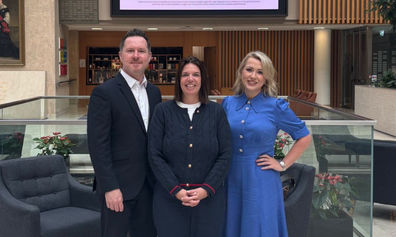
Sam MudieFounder and CEO of Savea
Transcript
Transcript
Elliot Refson: Welcome to the Jersey Finance podcast series on the tokenisation of real-world assets. I’m your host, Elliot Refson, Head of Funds at Jersey Finance. In this series, we’re exploring how innovative financial technologies are transforming traditional investments, making them more accessible, liquid, and secure through blockchain and tokenisation.
Today, I’m pleased to be joined by Sam Mudie, founder and CEO of Savea, a pioneering platform that’s tokenising fine wines and other rare assets.
Sam Mudie: Thank you for having me, Elliot.
Elliot Refson: Sam has chosen Jersey as the base for his operations, leveraging a world-class regulatory framework, expertise in funds, and supportive ecosystem for digital assets. Jersey has long been a global leader in fund management and structured finance at the forefront of the real-world assets tokenisation revolution.
With over 60 years of experience in international finance, Jersey offers a stable, innovative environment that’s attracting forward-thinking entrepreneurs like Sam. Our jurisdiction provides robust legal structures, tax neutrality, and a proactive regulator in the Jersey Financial Services Commission, making it ideal for launching tokenised products that bridge traditional and digital worlds.
In this episode, we’ll dive into how tokenisation is democratizing access to premium investments. Sam’s flagship product is called Savea. It is a tokenisation instrument infrastructure solution for the fine wine market.
We’ll also discuss Jersey’s role in enabling this innovation and Sam’s vision for expanding to other rare opportunities such as art, collectibles, and even real estate.
Sam, welcome to the podcast and thank you for joining us. Could you start by telling us about your background and what inspired you to found Savea? What problem in the traditional wine investment market were you trying to solve with tokenisation?
Sam Mudie: So my background is initially I trained and qualified in property investment, then shifted straight into traditional fine wine investment, where I spent 14 years, half in the UK and half in Singapore.
So I’ve got multi-jurisdictional experience, predominantly dealing with distribution to high-net-worth clients, quite often through private banks, wealth managers, and sometimes family offices. I’ve travelled extensively because of it. I’ve been exposed to incredible assets and very interesting clients.
But I’ve also had to deal firsthand with an archaic asset class that’s held back by a very traditional ecosystem.
So we’re obviously talking specifically about fine wine investment initially, but most of what I say can be applied to other passion assets, as we call them. Think fine art, whiskey, watches, classic cars.
The biggest inefficiencies that we’ve been held back by — you’ve touched on them — accessibility, scalability, liquidity, and in the middle, efficiency.
This asset class in its current state, the models that have been around for decades, work relatively well for, let’s say, upper mass affluent to high-net-worth individuals. Someone that might have liquidity to invest in alternatives from £50,000 maybe up to £500,000.
But below that, it’s inaccessible. There’s information asymmetry, high minimum investment levels, and quite frankly, even if you do find a model to invest in for less, you’re not going to get the best performance.
Equally, these aren’t scalable models because when you’re dealing in a physical asset class, there’s a lot of human involvement, a lot of manual processes, quite often bottlenecked by physical warehouses who literally use Excel for inventory management.
So to bring those kinds of assets into a modern digital financial ecosystem — in fact, even to bring them on parity with mainstream assets — needed something big, some huge shift in technology available. And for me, blockchain was that possibility, and of course within blockchain, specifically tokenization.
Elliot Refson: So for the listeners who may be new to this, can you explain what Savea is and how it actually works? How does tokenisation make investing in fine wines more accessible?
Sam Mudie: So first, what it is. It’s the world’s first wine index tracking product, which we’ve issued in Jersey under the Jersey Financial Services Commission. It’s the first product of its kind to give index exposure in the wine market. It just so happens to be issued on-chain.
So it solves, or certainly reduces, a lot of the inefficiencies that I mentioned, if not removes them.
For the first time ever in wine, you can get broad index exposure from £100. Similarly, an ultra-high-net-worth individual, family office, or institutional investor can get £10 million or £20 million worth of exposure efficiently, all for the same fee structure and liquidity parameters.
Because it’s distributed on-chain, it’s freely exchangeable across a secondary market, which has never been possible before in something like fine wine.
Now, that’s what it is.
Why it is — we looked at blockchain right across the wine industry. We looked at various applications from supply chain management to data to anti-counterfeiting.
Lots of these are potential opportunities, but relatively small or incredibly hard to actually solve. So in my eyes, slight red herrings.
We focussed on what we knew best, which is bringing the asset class to investors — and I say investors in the sense of capital growth, as opposed to a wine collector investing for their own enjoyment.
For that, we looked back at ETF models. ETFs improved accessibility, liquidity, and reduced friction in the middle. It massively opened up that market to a more global audience.
So we said, “Okay, today, what’s the best way to replicate that user experience?”
It just so happens that a combination of tokenizing physical assets — which for us doesn’t mean digitising ownership of a physical asset, it means digitising the rights to a physical asset — and the difference is really important.
Trying to digitise ownership of a physical asset is complex.
Ownership of something with a centralized registry like property or cars is relatively clear-cut, but you’ve still got multiple third parties involved.
Ownership of something like wine is harder. It’s a combination of paperwork, invoices, receipts, certificates, provenance, storage confirmation, physical possession, and even witnesses.
Trying to tokenise each of those elements is very difficult, if not impossible.
So actually, if you can keep ownership of the physical asset really straightforward — say this custodian or trust owns the wines, stores them physically, and they don’t move — all we need to do is tokenize the rights to it.
So we looked at a perpetual call option-style token.
Whoever owns the digital asset — the NFT, to use the token term — has the sole right to redeem for the physical asset.
Now, if you only go as far as that, you’re just bringing rights to a single case or bottle of wine on-chain. So what? You’re still trying to sell a bottle or case of wine.
So once we’ve got the digital right, it’s really easy to use as a reserve asset to a more scalable product, which is when we replicate the ETF-like user experience on-chain.
We re-tokenise a portfolio and distribute it as ERC-20 tokens, which act like shares in a traditional fund, but in this case, tokens in a smart contract.
So it borrows a lot of the best aspects from ETF models but puts them into this new streamlined tokenisation framework.
Elliot Refson: So the index is backed by physical wine underneath it. How do you determine what constitutes the index, and how often do you rebalance the index?
Sam Mudie: So this is the interesting thing — it’s taken this long to actually bring a product like this to market.
The index we track has been around for 25 years. It’s called the Liv-ex 1000 — the London International Vintners Exchange.
It’s the de facto benchmark index for global fine wine investment.
It’s 1,000 components created by third party Liv-ex.
Unlike the S&P 500 or Nasdaq, it’s not measured on market cap. It’s measured on a fairly subjective combination of volume traded, value traded, brand strength, availability in the market, and a number of other factors.
But consistently, it’s the same wines each year. Usually the oldest vintage goes out and a new vintage comes in.
So it’s really easy for us to replicate and buy the assets we need to act as reserves.
Elliot Refson: It’s really interesting that the index is based on something so well established.
What made you choose Jersey as the base for Savea? What specific aspects attracted you?
Sam Mudie: As mentioned, I was based in Singapore before. I was there for six years.
I set up Savea while in Singapore in 2022.
Initially, we were looking at getting regulated there under MAS.
Publicly, Singapore is very innovative and supportive of entrepreneurship, especially digital assets.
We got quite far down the road speaking with MAS about the SAVW product design and customer demand.
Everything was looking really good apart from one detail.
MAS said they weren’t comfortable with our tokens being freely exchangeable in the secondary market.
Of course, anyone buying SAVW directly with us goes through full KYC and AML checks.
But they also need to be able to freely exchange the token — transfer it to a family member, sell it to a stranger in New Zealand, swap it for Taylor Swift tickets with someone in New York.
We wanted that transferability without requiring repeated KYC and AML checks.
That also means we can plug into DeFi and centralized exchanges like Binance, Kraken, or Coinbase.
MAS wanted accredited investor checks on every subsequent owner, which we argued wasn’t our responsibility and actually defeated the purpose.
So we looked elsewhere.
We spoke to Dubai, Malta, Liechtenstein, Luxembourg — all the usual suspects.
Then we were introduced to the JFSC and specifically to Dilman at Walkers.
They immediately understood what we were trying to achieve and shared the same vision for where the future of this asset class was heading.
We started conversations with JFSC at the same time the RWA tokenisation guidance notes were being written.
I’d like to think our product design helped shape some of those final guidance notes.
I think we were actually the second company to receive consent to issue the product and publish our offer document in Jersey.
So far it’s been really good.
For two years I’ve been trying to have similar conversations with the FCA in the UK and it’s been brick wall after brick wall.
Jersey’s a speedboat. It’s nimble. It can change direction quickly.
The FCA is a much larger machine.
That’s why Jersey continues to be the place for us to build new things.
Even now we can sit down with regulators over coffee and discuss what we want to do next.
Elliot Refson: And talking of new things, you’re up and running with the wine index.
What other rare investment opportunities and asset classes are you looking at, and how do you think tokenization will unlock value in those markets?
Sam Mudie: Tokenisation can be far-reaching.
I think every asset can be tokenized. That doesn’t mean every asset should be tokenized.
Right now we’re pivoting from building our own product to becoming much more of a B2B SaaS platform.
We want to work with wine investment companies, art funds, watches, whiskey — businesses that already have the assets and just need a better structure.
We bring in our tokenization model and issuance framework.
In the next couple of years, I see us having multiple wine products and potentially working with actively managed portfolios too.
On the art side, we’ve had conversations with one of the largest auction houses in the world.
Fractionalised art investment already exists — Masterworks is a good example — but it still doesn’t provide proper diversification.
The idea we have is to tokenize every individual artwork in a collection, but instead of selling individual fractions, place them into an ETF-like structure and issue shares in that broader portfolio.
That way, someone investing $1,000 gets exposure to Monet, Manet, Banksy, and Picasso all at once.
We’ve also been approached about real estate tokenization, bloodstock tokenization for racehorses, and even Ming dynasty furniture in mainland China.
That last one was fascinating.
Family offices had enormous collections they couldn’t easily sell internationally.
The idea was that we could tokenize rights to the furniture and issue exposure from Jersey without the physical assets ever moving.
At one point I even spoke at Beijing Fintech Festival and was told our vision aligned exactly with the Chinese government’s vision.
A few weeks later they banned RWA tokenisation.
But it proved how viable the use case really is.
So the applications are far-reaching.
We probably can’t even imagine all the use cases yet.
Elliot Refson: So the potential is really limited only by imagination.
Where do you see yourself in five years’ time?
Sam Mudie: Retired and sitting on the beach in Jersey.
But realistically, in five years we want to be a full B2B SaaS business.
We want to provide a template platform where asset owners globally can tokenize what they physically have, follow proper custody and audit trails, and issue products from Jersey.
At that point we become asset agnostic.
Potentially beyond that, maybe there’s an exchange business in it too.
An exchange where you can freely trade exposure to niche alternative assets.
These asset classes are incredibly inefficient right now.
The efficiency gains from tokenization could be huge.
Elliot Refson: From the tokenization we’re seeing at the moment, there are two approaches.
One is institutions tokenizing for their own clients.
The criticism of many other platforms is that there is no liquidity.
On your platform you seem to have solved the liquidity problem. How have you done that?
Sam Mudie: I definitely wouldn’t say we’ve solved liquidity.
We’ve improved it.
If you invest in physical wine today and want liquidity, you’re trying to sell multiple individual cases to multiple buyers.
It’s slow, expensive, and full of manual processes.
Three to six months is considered good liquidity in wine.
When markets are bad, it can take a year.
What we’ve done is bring the physical value into a digital ecosystem and represent it as broad market exposure.
Instead of needing to sell specific wines, we only need to sell exposure to the market.
Transactions happen instantly through smart contracts.
No manual invoicing, no delays, and significantly reduced friction.
We also manage redemption restrictions carefully.
For example, investors can redeem 5% per month in year one, increasing over time.
By year four they can redeem 25% per month.
That provides certainty and dramatically improves access to liquidity.
We also maintain stablecoin reserves like USDC in the portfolio to help manage redemptions.
Elliot Refson: Last question for you, Sam.
For anyone interested in tokenizing assets or exploring Jersey as a base, what advice would you give based on your experience with Savea?
Sam Mudie: Two routes.
Engage a really good law firm.
Over the course of 18 months across Singapore, Dubai, Jersey, and the UK, we’ve done a huge amount of legal work — not just compliance, but actual legal innovation.
We’ve effectively created a new issuance structure and distribution channel.
So either engage a very good law firm, or come to us and we’ll help you tokenize and issue.
Elliot Refson: Sam, thank you very much for doing this.
If you enjoyed listening to this episode, don’t forget to subscribe, and thank you for listening.
Tokenisation is increasingly moving from concept to implementation across global financial markets. From funds and private credit to treasury functions and broader real-world asset structures, institutional adoption is accelerating and reshaping the future of finance.
Join us on Thursday 4 June, in London for our next Funds Focus event where we will discuss these topics further.