Global Coordination: The Rising Need for Integrated International Planning

Investment performance, capital preservation, wealth transfer, risk management and legacy planning continue to be pivotal in family wealth planning – but those objectives are becoming significantly harder to address in isolation.

16 Sep 2026

As families become more geographically dispersed, wealth structures are becoming more sophisticated, placing a question mark over the traditional model of advisers across multiple jurisdictions dealing with separate pieces of the puzzle.

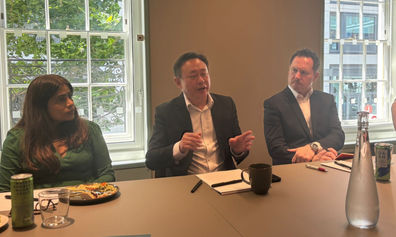
This was a consistent theme across a series of roundtables Jersey Finance held over the summer, with private clients and family office advisers across US, Africa, Middle East and African markets coming together to share their insights into the trends that are shaping their worlds.

The message was clear – the complexity of international planning is creating a real need for integrated advice, connecting tax, legal, investment and relocation considerations, with clients looking beyond single-jurisdiction solutions and towards globally coordinated structures.

That has significant repercussions both for advisers and international finance centres (IFCs) supporting globally mobile families of wealth.

Diverse geographies

This complexity is being driven by a number of factors, with geographical diversification identified across the roundtables as one of the strongest trends of the past year. The UBS Global Family Office Report 2026, for instance, notes that 88% of family offices have bankable assets in two or more jurisdictions.

Security and stability are increasingly prominent considerations, as families assess their exposure to geopolitical risk and seek greater resilience in where they live, invest and hold assets. Ongoing conflicts and wider geopolitical uncertainty have also reinforced the importance of diversification, security and jurisdictional stability in these decisions. Education remains another important driver, with families continuing to make cross-border decisions and establish structures that support access to leading schools and universities.

Combined, this has fuelled increased demand for relocation advice. Importantly, conversations at our roundtables focussed on how families are taking a nuanced view on relocation, with moves tending to be partial or multi-jurisdictional, opting for multiple passports or residency rights that support lifestyle and business interests.

A family may, for example, have an operating business in one country, real estate in another, investment portfolios administered elsewhere as well as family members resident across several jurisdictions. The legal, tax and succession implications can become highly interconnected.

Notably, discussions with advisers to US families highlighted a marked increase in international structuring for US-connected individuals, driven by changing tax regimes, regulatory developments and clients seeking greater flexibility in where they live, invest and hold assets.

And it is working both ways. The UK continues to attract interest from US families, particularly through investment into the UK’s technology and real estate sectors. Conversely, our roundtable participants discussed opportunities for UK start-ups expanding into the US, recognising the scale of the US market and access to venture capital.

Wealth transfer

The second major driver is the growing complexity of intergenerational wealth transfer. The scale of the transition underway is substantial – over the next 20 years, UBS predicts the value of wealth to be transferred at US$83 trillion – but preparedness remains uneven.

The 2026 Global Family Office Report also finds that only 45% of families currently involve the next generation in succession planning. However, among those where the next generation is not yet fully involved, 52% are looking to introduce financial education or training programmes in the future.

These findings underline why families increasingly need to consider the effectiveness of their succession planning. Families need to consider not only the transfer of assets, but also issues such as business ownership, philanthropy, governance, family constitutions, the education of beneficiaries and the different needs and ambitions of successive generations.

Our roundtables highlighted how this continues to be a live issue in the UK, given its changing tax landscape – notably the implications of the Foreign Income and Gains (FIG) regime and ongoing changes to the Inheritance Tax (IHT) framework. Participants explored how the use of life insurance solutions as a means of mitigating future IHT liabilities while preserving wealth is increasingly part of the conversation – again reflecting new approaches to wealth transfer dynamics.

Investment ambitions

The third major driver is investment. Family offices are increasingly behaving like sophisticated institutional investors, with increasing exposure to alternatives alongside traditional public markets.

BlackRock’s 2025 Global Family Office Survey, for instance, finds that seven in ten family offices have or are planning to make changes to their portfolio allocations. Alternatives now account for 42% of families’ portfolios, including private equity, private credit, real estate, venture capital, liquid alternatives and infrastructure, with nearly one-third of families planning to increase allocations to alternatives before the end of this year.

For trust and wealth professionals, this trend matters because investment structures increasingly intersect with succession and governance; an investment strategy, our participants repeated through our roundtables, can no longer be designed independently from a family’s wider wealth plan, with greater education around fund structures, cross-border investment vehicles and jurisdictional differences, consistently high on the agenda.

Holistic view

For IFCs serving the needs of global families, there are clear lessons.

On the one hand, jurisdictions that can offer easy access to the diverse solutions demanded by families are well positioned. But technical capability alone is not enough. As families become more global and their affairs more complex, the ability of jurisdictions, advisers and service providers to collaborate effectively is becoming equally important.

In both contexts, Jersey is well positioned. Our roundtable conversations repeatedly highlighted the breadth of the Island’s specialist expertise. This spans traditional wealth management and structuring as well as alternative assets, robust governance frameworks and access to specialist service providers and digital tools, providing a compelling proposition where integrated advice is vital.

Participants also pointed to Jersey’s global connectivity and role as a neutral hub for pooling and administering international capital – with the jurisdiction acting as steward for some £1.3trn of private capital globally, supported by strong links across the US, Middle East, Africa, Europe and South-East Asia.

Ultimately, our roundtables highlighted that the priority for wealthy families today is increasingly holistic rather than product-led. It is about bringing together the right jurisdictions, advisers, structures and expertise in a way that works cohesively, helping families navigate complexity, protect and transfer wealth, and achieve their long-term objectives.

To find out more about Jersey’s private wealth expertise and to keep up with our work, sign up to our newsletter.

Key Contact