Your Career, Your Future
People, Purpose and Performance
21 Sep 2026
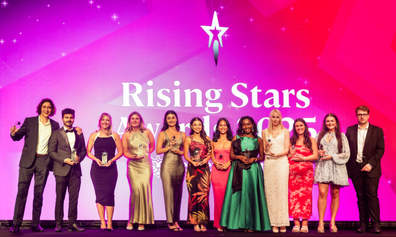
In this podcast episode, we’re joined by three winners from our 2026 Rising Stars Awards; Petra Felgueiras from Hawksford, Charlotte Dawson from PwC and Clara Slee from RBS International. They share their experiences of building confidence, progressing in their careers and finding opportunities to grow.
Together, they explore what makes a great workplace, what people should look for in an employer and why culture, purpose and community impact are becoming increasingly important.
They also discuss the role of mentors and managers, stepping outside your comfort zone and the skills that will matter as technology and AI continue to shape the industry.
Whether you’re just starting out or thinking about your next career move, this episode offers practical advice and perspectives from three people making their mark in Jersey’s finance industry.
Tune in to hear their experiences and discover what could help you take the next step in your career.
Listen now
Read the transcript
Louise: Hello, and welcome to Your Career, Your Future, a podcast that takes you behind the scenes of what it’s really like to work in Jersey’s finance industry. I’m Louise and I’m head of marketing at Jersey Finance.
Today, we’re talking about people, purpose, and performance. So whether you’re considering a career in financial services, just starting out, or thinking about your next step, we’ll be hearing from people who are building successful careers in the industry about what they’ve learnt along the way. So what makes somewhere a genuinely great place to build a career? What you should look for from an employer, and how you can build confidence and progress early in your career. We’ll talk about things like workplace culture, community engagement, and company purpose, and how that’s changed what a successful career looks like.
To help us explore all of that, I’m joined by three winners from our 2026 Rising Stars Awards. We have Petra Felgueiras, winner of the Corporate Services Award, Charlotte Dawson, winner of the Community Impact Award, and Clara Slee, winner of the People, Talent, and Culture Award.
Petra, Charlotte, and Clara, welcome, and it’s really great to have you here. Before we get into today’s topic, can I get you to each briefly introduce yourselves? So tell us what you do and how you got to your current role. So Clara, can we start with you?
Clara: Yes. I’m Clara. I’m the finance business partner at RBS International. I’m also a co-chair of an employee network for personal and professional development. I joined the NatWest graduate program in 2022 after studying a psychology degree at university. I spent my first year in financial crime risk before wanting a change of scenery, and then I moved into finance, where I’m in my current role now.
Louise: Thanks, Clara. And Charlotte, how about you?
Charlotte: Yeah, so I’m Charlotte. I am a digital marketing senior associate at PwC. Um, I’ve been at PwC for about a year and a half now. Uh, prior to that, I worked at the JEP doing digital marketing as well. Basically cover all things social media, website, video, all the fun stuff, basically. A really interesting role, yeah.
Louise: And then Petra, how about you?
Petra: Hi, I’m Petra. I’m an assistant manager in corporate services at Hawksford. I actually started my career in funds, and I was there for four years. Whilst I enjoyed it, I had, um, a strong interest in real estate, um, so I’ve moved to Hawksford, and I’ve never looked back. Every day is different. A large part of my role involves, um, a significant residential property in the UK, where we’re dealing with ongoing Building Safety Act requirements. So every day is just remediation work and stakeholder management, so I really enjoy it because there’s a real human element to the work that I do.
Louise: I’m always really interested when we record these podcasts as to the ways people have come into the industry, because it’s always so different and so varied, and everyone brings a different perspective, uh, with them, which is, which is great.
The finance industry here is, is really diverse. But can I just say, it’s fantastic to be joined by three ladies today, which is, um, great to see the girls representing our industry. Um, so you’ve each been recognised as a rising star in your area, uh, which is a fantastic achievement personally, but what has the award meant to you, um, personally, but then also professionally? Shall we start with you this time, Petra?
Petra: Um, I was very proud, and it was a very unexpected moment. I think even just being shortlisted is already an amazing thing. Um, but it really gave me the chance to stop and recognize how far I’ve come, but also motivating me to keep progressing and to see what’s on the horizon.
Louise: Yeah, people always say that. Just that initial recognition by your own company that they value you and that they put you forward for this award is such a big thing. Whether you end up being shortlisted or whether you end up winning, um, ultimately, it’s always, um, it’s always exciting when you first find out you’ve been shortlisted, I think. Uh, Charlotte, how about you?
Charlotte: Yeah, I mean, I couldn’t agree more. When l- when you first find out that you’ve been shortlisted, it’s kind of like, “Oh, my gosh.” So yeah, it was amazing. But I think also to be recognized for the work that I’m so passionate about is an amazing thing on top of that. It kind of gives you that motivation to keep pushing forward and keep doing what you’re doing, and it actually proves to you almost that what you’re doing is having a positive impact on people. So yeah, it was amazing.
Louise: And Clara, the same sense of excitement, little bit of trepidation maybe?
Clara: Yeah, I do have to echo what the others said. I think even being shortlisted, I was very shocked and really grateful. But to actually win, it did make me pause, and I was just surprised by how many people actually took the time to vote for me. I think it meant a lot, and it really made me reflect on all the work that not just I do, but the work that I do with my colleagues and with my mentors, ’cause it’s, I feel like the winning is kind of the product of all the work that we’ve put in together, which is really nice.
Louise: Yeah, nice. It’s a, it’s a team effort. Yeah. So that kind of combination of being recognised personally, but also how that reflects on the team around you and your organisation and everything else is, is important too.
You’re all relatively early in your careers, um, within sort of the first five to eight years, I’d say. So one thing that I guess is difficult early in your career is having that confidence when you’re surrounded by people who’ve maybe been in the industry 20, 30 years plus. How have you approached that? So what’s helped you build that confidence and, and get that credibility within your organisations that’s ultimately led to you being put forward? How did you build that so early in your career? Maybe this time, shall I start with you, Charlotte?
Charlotte: Yeah, sure. I mean- I think, again, like I said before, doing work that you’re passionate about kind of gives you that open door to be confident in it. If you’re, if you’re passionate about something, you’re, you’re almost an expert in your field, you know? So having that confidence kind of comes naturally almost.
But I also think being surrounded by people with more experience than you isn’t a negative thing. I think it’s something we should use positively. I know I do. I have some great role models in my team, and looking up to them, learning from them, asking questions, being proactive and taking on those leadership roles, I think, yeah, I think use it as a positive, not a negative, for sure.
Louise: Yeah. Uh, Clara, what, what’s your take on that?
Clara: Yeah, I would agree with that. I think it’s the colleagues and leaders around me who’ve helped me grow. They’re the ones who, if I have an idea, they’re the ones who push me to actually go for it, and it’s– they’re the ones who say, “You do it, and we’ll be the coach, and if you have any questions ask, but we want you to be more hands-on.” So I think when I look at what’s really helped me grow, it is the people around me at work.
And the same idea that if you reach out to senior colleagues and you get advice, I find they’re always happy to share their knowledge and their experience. So I’d just recommend that, ’cause I think that’s been the most prominent thing in helping me grow.
Louise: No, I absolutely agree. And Petra, what, what’s your thoughts on it?
Petra: Um, I totally agree. I feel like a few people have imposter syndrome, and that’s something that I went through a lot where I was just questioning everything, even whether finance was for me. But I had the opportunity to get external coaching with Alt Collective, and they were great, and they really helped me. And they just helped me rebuild my confidence and really show what I was capable of doing.
But I also think putting yourself out there and saying yes to more things, um, even though they’re a bit scary, like this podcast. [Laughs]
Louise: No, you’re absolutely right. Um, we were talking before we started recording about generations and generational differences, and I have to say, I’m, oh God, about 25 years now in the finance industry. Um, and I absolutely echo everything you’ve said. That concept of, of helping the next generation up. So when you said, um, before, Clara, about asking a, should we say older? Should we say more experienced? [Laughs] Asking an older colleague, um, I can own that word, it’s fine, um, that for help or support, I think, you know, it’s fantastic for me to be able to offer that hand and, and bringing the next generation on and bring the next generation through. It’s so rewarding as well.
Um, and then to pick up on something you said about coaching, Petra. We offer a coaching program at Jersey Finance, and apologies for the quick plug. But it, it literally, it puts together me- we call it mentors and mentees. And I’ve, I’ve been a mentor a couple of times, and it’s hugely rewarding for me to take part in. And same when we look at, we do, um, work in finance, where we have people come in from schools to work in, in Jersey Finance for a few weeks, and we get, we have the opportunity to meet young people. It’s so inspiring.
And the other thing I would say is that it is, it’s an equal partnership these days because there are so many things. We talk about digital natives, and your generation coming through have had technology from, from the, almost the day you were born. That my generation, I mean, I think I was about 15 or 16 before I had computer lessons at school, if you can imagine that. So I’ve got so much to learn and, you know, on a daily basis when I need help with something techy, I’m looking to the, to the younger people or the newcomers to the generation because you have got that native experience and… So yeah, it’s a reciprocal thing that, that both generations can learn from and, and build one another. Definitely. Let’s talk about workplace culture now.
So Clara, given your work, you’re specifically involved in sort of people, talent, and culture, I guess what we, what we call HR in a sense. Can I come to you first? So what makes you think somewhere is a genuinely great place to work and, and makes people feel valued?
Clara: I’d say to start with, we spend so much of our lives at work that I don’t think you can just kind of switch off your personal side and then go in and forget everything for 40 hours, and then go home and switch back on. So I think it’s recognising that colleagues are people at work, and everyone has different needs depending on different stages of your life and your career. An employer that can meet the needs,
I think, is key to making a great place to work. So it’s not just investing in customers and the products, it’s investing in the colleagues. And then when people feel valued at work, they’ll then be more engaged and motivated, and they’ll wanna stay and they’ll wanna work harder. Um, so it’s about a workplace that can provide a diverse range of resources and opportunities to help colleagues, not just professionally, but as well with any of their personal needs as well.
Louise: Yeah. I think a word that springs to mind there when you were saying that is authenticity, and we always say about bringing your authentic self to work, and workplaces that enable that. So I think when we go into schools sometimes, students still have this impression of the finance industry as somewhere where everyone’s still wearing suits and shirts and ties, and you have to have a certain behavior or characteristics or personality to work in the finance industry. And that’s just not the case anymore, right?
It’s, it’s a very diverse industry. Uh, I guess, you know, coming to Petra and Charlotte, does that reflect your experience? Is there anything that you think you’ve seen organisations do well?
Petra: Um, yeah, I totally agree with your point about being authentic. I think that creates a really good culture for also asking questions, or even not being scared to ask questions to people above you, like your head of funds or anything like that. But also what generally makes a great workplace, I’d say, is 100% the people, like you said.
Um, I think it’s also nice to have a good fun environment as well, but then again, also the opportunity to develop and progress. Again, like you said, Jersey Finance offer the external coaching, so I think that’s really good.
Charlotte: Yeah, I agree. I mean, I think when employees feel heard and feel listened to and things like that, it, like you said, Clara, it, it motivates them to want to put more work in and want to do all these things for the firm. I think at PwC we’re always launching new initiatives that, for our staff. Like, we have, every year we have a, one example, we have a heritage and culture week, which is a week-long program that, I mean, we have so many different cultures at PwC, it’s amazing, and I think it celebrates those different people. And all throughout the week we’re having different cool sessions and things like that, depending on which culture you’re from. And then on a Friday everyone brings in their own food from that culture, and everyone’s invited to wear their cultural attire, and it’s, it’s such an amazing experience. Everyone’s looking forward to that day ’cause it, it just brings the company together. I think, like I said, it, things like that just create such a positive, collaborative environment.
Louise: It is that environment is, is so important, and one of the things we, we were gonna talk about is about the community impact and that organisation that you work for having a sense of purpose. Um, and I think those two things are tied really closely together. So, so Charlotte, given your work around community impact, why do you think that matters for businesses to engage with and give back to their, to their communities and to lean into that, that cultural aspect that you mentioned?
Charlotte: I mean, I think it, it allows businesses to make such a tangible difference locally. I think it builds trust in the community, it helps us connect with different people, address maybe social challenges or things like that. It really reinforces our kind of sense of purpose as a business, and I think an example of something we do is actually the Jersey Finance Greening, Jersey Greening Trust. We are, we take part in that, so however many times a year we do it, we, we’ll go and plant trees or something. And it’s getting our kind of staff members to do that together- Go and plant trees somewhere in Jersey. It’s not only helping internally, I mean, it promotes teamwork. Everyone’s so excited to be out about planting trees. I mean, what more would you wanna do with your Monday morning? And not only is that helping us internally, it’s also externally. We’re obviously supporting the local environment. So yeah, I think, I think it’s really important.
Louise: Yeah. And I think as well, generationally, people want to feel like they are giving back to the community. It’s not just about- Yeah … going in, earning a wage, progressing through your own career. It’s having that, that sense of belonging to, to something bigger and, and having that wider, that wider impact on the, on, on something like the environment- Yeah, absolutely … or your communities is really important.
I love those Greening Jersey events because we, I nearly always meet some new people, and sometimes people come along with two or three colleagues from, from their own company, and sometimes colleagues they wouldn’t normally mix with. Yeah. Um, and then other times someone will just come along on their own, and they’re the only person from their organisation, and they get to, to meet people from, from- Yeah … different companies but that have that same common interest in, in so, so the environment in that, in that particular case. So, so the other two, the other two guests, um, can that have an impact inside an organisation too? So giving people those opportunities to get involved in their community, how does that help create a, a stronger workplace culture?
Petra: I would echo what you said, Charlotte. I feel like it creates a shared, um, sense of purpose. Um, at Hawksford we have volunteering days as well, but what’s good is that it’s different departments that you’ve only spoken to through email, or you don’t even know how they look like. So I think it’s so nice to actually get to meet those people, and it’s not as daunting when you actually reach out to them to ask something. It’s kind of nice to get on a personal level, and obviously giving back to the community in a way as well with the volunteering. So yeah, agreed.
Clara: Yeah. I think you both captured that really well. Um, being local in Jersey, it’s such a small place, um, you know someone who knows someone who benefits from these charities. Um, so it’s really kind of touching to be able to make that personal connection, but also in the workplace, having a joint purpose outside of just your work tasks. Um, and I’ve seen people who, we have the same, we have volunteering days at NatWest, and I’ve seen people who go for volunteering day, and it means so much to them that they now do it outside of work, and they’re really passionate about it, and I think it’s just really nice to have those outside passions and be able to connect over it.
Louise: Of course, culture also plays a big part in whether people firstly join an organisation, but, but also whether they choose to stay. So when people are thinking of starting a career, choosing the right employer makes a huge difference. From the three of you here today, what, what do you think people are really looking for or, or should be looking for, not just in the job itself, but in the organizations that they’re joining?
Charlotte: I would say for me, joining PwC, one of the kind of standout points for me when I w- went through the whole interview process was- My clear career path. I, from very early on, I was kind of shown how I would be able to cr- progress throughout my career. And I think for me, that was such a, “Oh, okay,” ’cause I, I can actually see where I’ll go, and I can actually see how I’ll develop, and what they need from me, but also what I need from them. And I think for me, that was so important.
I think flexibility’s important. I mean, it’s, it’s great to be able to kind of work from home if you need to, say, for example. Obviously nowadays, post-COVID, more and more people are doing that. I don’t think it’s a bad thing, as long as you get your work done. And I mean, like we were saying about the whole culture internally, externally, somewhere that supports your values or… We, we also do a lot of sports and social activities within our firm, so I’m part of the netball team at PwC. And again, that was such an attractive point for me, ’cause I love my sport, and I love doing things like that. And I, I didn’t know anyone when I joined PwC, so I met loads of people through netball. So things like that. Obviously, the job itself was very attractive. That helped. But all of those extra kind of curricular things.
Louise: No, I totally agree. Yeah. And it has echoes of what we were saying earlier when we were talking about the sort of authenticity thing, and it’s, it’s acknowledging that people have lives outside- Exactly, yeah of work, right? And, and that work is a part of, um, our lives, but it’s not all of our lives. And, and having friends at work is a, is a really essential part, and something that makes work enjoyable. We said about having fun at work. Believe it or not, work can be a fun place. [Laughs]
And, and a lot of that comes down to, I mean, I’ve got best friends that I made through work that I’ve been friends with now since I was 17 years old, and we are pushing mid-40s, and we still meet up. And yeah, it is, it’s a big part of your life. So it, so it is really important that you look at, yes the role, yes the company values, the career progression, um, but also, like, the people that surround you and, and having that, that opportunity there. Petra, your, your thoughts on that one?
Petra: Yeah, I would totally agree. I think you want a place where you’ve got the opportunity to learn more, but also to progress as well in your development. And even mentoring, something that Hawkes mentioned was mentoring, and again, like you mentioned with netball, the same with us, but a running club. Yeah. I thought, “Oh, that’s quite nice. It matches, like, my, um, lifestyle as well.” But also as well, like you said, the flexible working and working from home, I think COVID times really proved that you can do that. Even mothers, I’d say, or people who have dogs, um, I think it’s just, yeah, it’s really helped.
Clara: Yeah, I think the flexibility is I, it’s increasingly important, I think especially exactly what you said, post-COVID. I think we’re– and we’ve said it a few times already, it’s about the people side of work and balancing your– it’s the work-life balance. But I would say for me, when I joined the NatWest graduate program, I, I didn’t have a set career plan. I did psychology at university. Um, didn’t really know what I wanted to do. But I liked the program because you were in a wide variety of teams across the bank. So what’s important for me was the learning opportunities, the encouragement that, okay, you might– you don’t have to go in knowing a lot of things already about finance or economics. You can be completely fresh, blank canvas. You’re here to learn. That’s the point of being here. Um, and I’ve been there four years now, and that kind of culture has still remained of always constantly pushing employees to learn, which is just what I really liked.
Louise: Let’s widen that out then to Jersey. So we want the island to be somewhere where talented people can, um, start a career or move to Jersey, build their lives, and, and really see a long-term future for themselves. So what do you think Jersey needs to do to remain competitive and, and attract the next generation? And maybe just if we start briefly as to whether you were born in Jersey, moved to Jersey, and, um, and how that might, might change your perspective a little bit. So shall we, um, start with Petra?
Petra: So I was actually born in Madeira, and then I came here when I was eight. So I learned English and went to college, and immediately I went into finance. And something that I was gonna mention was I think reaching people through college about careers, I think that’s really important because it really motivates you from the start. Um, I was a bit unsure on what my career path would look like, and one of the banking organisations in Jersey came to college, and they did a talk, and I was li- like, “Wow, this is so motivating.” And it was actually my first job, and I sent my CV, and I went through that.
But I think also to show other people that you can get other jobs, and it’s not the traditional banking and accounting area. There’s other jobs that are, like, fun now, such as real estate. But then also now that AI is getting such a big thing as well, and technology. So I think that area’s getting much bigger now as well.
Louise: Yeah, definitely. Whatever your interests are at school, whether you’re sort of arts, math, sciences, you know, humanities, um, there, there’s so much crossover, and it’s not just a case of you need to have a degree in maths and become an accountant to be in the finance industry. It’s, it’s so broad and it’s so varied, and yeah, we absolutely try and get that point across when, when we go into schools. So it’s good that that, that that reached you and that, that you now joined, joined the industry. Um, Charlotte, how about you?
Charlotte: Um, so I was originally born in the UK, but I moved over here with my family. Similar age, I think I was about 10 when I moved over here. But I went through school, and then I went away to uni, and then I came back. So I guess what made me want to come back, I guess, uh, I’m a bit of a home bird in the sense that- I wa- I wanted to be back with my parents and kind of nearby to my family and my brothers and stuff.
But also, I w- I really wasn’t sure what I wanted to do. I did a film and TV production degree at university, and just because that’s what I enjoyed at the time. So I think I decided to come back home after uni ’cause I kind of thought, “I’ll have that safe space, and then I’ll be able to kind of try and dip my toe in a few things and see what, what tickles my fancy,” I guess. And then I, I got an internship at the JEP actually doing journalism. Really enjoyed it, but s- quickly discovered that it wasn’t my strong suit. So that’s when I kind of fell into digital marketing. What kind of I think is important is, like Petra you said, the whole AI thing. I mean, it’s increasing massively day to day. So enhancing that skill development and innovation and especially in schools, I think, is really important. So that kind of active investing in education and skill development for them.
We kind of sponsor a project, STEM on Track. I don’t know if you’ve heard it. So they do it in Hautlieu School, and they’re now kind of progressing it to more schools this year hopefully. But things like that. STEM is obviously, STEM careers are traditionally a male-dominated industry. And we go into the Hautlieu School last year when, when it launched, and the amount of girls you see taking part, amazing. Like, it’s incredible. And to actually see those students decide that, “Actually, I hadn’t even thought about this. This is what I want to do.” But also not just the engineering part. We, we went in and we gave a, myself and my team, we gave a marketing presentation to the students. So even the students that were sat there thinking, “I wanna be an engineer when I’m older,” they listened to us and they were like, “Oh, hang on. I could be an engineer for Or I could be a marketer for a Formula One team or something like that, if that’s the kind of thing they’re interested in. It kind of made it click that there are so many other things out there, like you said.
Louise: Yeah. And finally? Um, so I moved to Jersey when I was 21 for the graduate program, so I was born in the UK. So, um, that was my first time coming here. Um, and I would like to see more of the graduate programs, the internships, the apprentice schemes. I think that– it echoes the point about investing in young people and the education. I think it’s a great opportunity for students who either have a degree or want a degree whilst they’re working, or they don’t want a degree. I think it’s a great opportunity for them to learn what they want to do, and I’d love to see more of that in Jersey.
And the AI point, I think, you know, Jersey’s an international finance center, and I would love to see us be more experimental with technology and really be, like, pioneering and leading in that area, because I think we could be more of a pilot hub or just experimental. I think we have the right kind of size for it.
Louise: No, I think, um, you make a really interesting point because I think the jobs that we are all doing today either won’t exist, will exist in a different form, or will certainly look very, very different, um, in the future. So something like a graduate program, uh, that you mentioned, or whether it’s sort of straight in after A levels, it’s a great way just to get people into the industry. And I think sometimes at that age, you know exactly what you want to do and what you want to be in life, and sometimes you don’t. For the people who don’t, it’s, it’s an opportunity to come and be experimental and try something, because actually, if you do apply for a job today, it’s gonna be very different in 10 years anyway, so, so why not just come in and experiment and see what, see what sticks for you and see what works.
Also really nice to hear there a mixture of coming from Jersey, coming from the UK, moving here, and also having gone to university and having not gone to university, or having gone to university and done a very different degree to, to the field you’re now in, just again shows us that there is so much variety in the industry, um, and that it really is, um, broad and, and wide-ranging, the opportunities that exist.
Let’s talk about career development. So thinking about your own careers so far, what’s the one thing that’s really helped you progress? So it might be a manager, it might be a mentor, someone who’s backed you. Let’s start this time with Clara.
Clara: I would say it’s three women at my workplace who come to mind. A manager and then two colleagues who’ve kind of become an informal mentor. I joined, you know, 21, fresh out of uni, very low confidence, didn’t have any financial background. Um, and they kind of spotted me, uh, especially the colleagues I see like mentors, um, and they really encouraged me to recognize my strengths and take opportunities. Two of them were going out of their way. Like, they weren’t in my team. I didn’t work with them. I don’t know what they saw, but they just really pushed me to kind of go out there, put my name out there, try new things.
I think one of the really- prominent things they would tell me, and you’ll probably agree, is the idea of getting comfortable with being uncomfortable. Like the only way- Yeah … you will grow is if you, you know, put yourself in those scary situations.
Louise: That doesn’t change, by the way, as you progress through your career. There will always be opportunities to, to put yourself out of your comfort zone. And, and it’s always the best way to, to kind of extend what your comfort zone looks like. ‘Cause each time you do something that’s a little bit uncomfortable, that then becomes comfortable, and you’re onto the next thing. So yeah, it’s really great advice that, that they gave you to, to push yourself outside of, of your zone.
Charlotte: I think, again, mentors, leaders, it, the most important thing. I mean, my manager and my director at work, they’re two amazing ladies, and they push me every day to kind of, like we said, step out of my comfort zone and be the best version of myself. They, they know I’m capable, so it’s just that trust, I guess, that I have to have in myself that I’m actually capable of doing it as well. And also, to be honest, winning this award gave me a massive boost, I think. Um-
Louise: Confidence boost … absolutely. Yeah.
Charlotte: It, it’s completely something that I’ve never would’ve even thought. I don’t know. It’s not, it’s not something I could’ve pictured myself doing, if you know what I mean. So yeah, when, first of all, when my director decided that she wanted to nominate me, that was kind of like, “Wow, okay, I must be doing something right.” And then, like we said at the beginning of the podcast, making it through all those stages, getting shortlisted, and then winning ultimately, probably the biggest confidence boost you can get. So it’s, I guess, just trying to do more of that, and trust and believe in yourself that you can do it.
Louise: We heard the word imposter syndrome earlier in this podcast. Yeah. And I think that that is, that is the, uh, the crux of it, isn’t it? The things that help you get over imposter syndrome- Yeah … the other people telling you that, that you’re doing well, that having the awards accolades. And, and what I’d say is that, um, there will undoubtedly be people managers, HR professionals listening to this, um, and what comes across is the big influence that we can all have on other people, and, and giving them that confidence and helping, helping them and, and support them.
Louise: We’re coming towards the end, so I’d like to look ahead. There’s lots of change across financial services. We’ve mentioned technology and AI. There’s also regulation, client expectations, and all those kind of things. So, um, if we do this as sort of a slightly a quick-fire round, and I start with you, Petra, what skills do you think is gonna become increasingly important for the next generation?
Petra: I think with how technology is growing, I think technical knowledge will remain important. But future leaders will also need to adapt to that because I think the older generation, I think, can be more reluctant to using technology. And I think- The younger generation should just kind of push, push that, I think. And AI is a great example of that. I think some people are really hesitant to use it, um, because, you know, they’re scared it’s gonna steal their jobs or anything. But I think it’s how you use it, and those who learn how to use it efficiently and responsibly will know that it works really well, so.
Charlotte: I think, I think as well, Petra, like you said, having… So you’ve got leaders, you’ve got young, next generation people coming into the firm. Don’t be scared to learn from each other. You know what I mean? Obviously, we’ll learn from a, our leaders above us. They’ve got w- wealth of knowledge and experience that we can learn from. But also, like you said, AI especially, they, they can also learn from the next generation coming in, and I think don’t, don’t be afraid of that. It, it, it’s a good thing. We, we’re collaborating, and that leadership of being able to learn from people around you.
Louise: It’s so important, and within the next 10 years we’ll have people coming into organizations that have always known AI. Yeah. That won’t remember a world before AI. Exactly, yeah. Um, yeah, so, so it continues.
Clara: Um, I think you said it there, Charlotte, with the human side. I think as technology grows and technical skills become more important, I don’t think they’ll be able to take away the actual face-to-face bit and, you know, stakeholder management or communication. I think that will remain really important, probably more important as we’re given- Yeah all this data and probably an abundance of data and with AI. Um, I think it’s the human side, the judgment, communication in between all that. That’ll be really important.
Louise: We’ve covered an awful lot of ground today, and so I’d like to end, if I can, on just a quick question for each of you.
If you could give one piece of advice to someone starting in their career, what would it be? And Petra, let’s start with you.
Petra: I would say, say yes to opportunities, even if you don’t feel completely ready, and just get out of your comfort zone, ’cause that’s when you’ll grow.
Louise: Charlotte?
Charlotte: Completely agree. Be confident, be curious, be yourself. Um, like you say, seek out opportunities that maybe are beyond your immediate day-to-day role. Get involved, and also build a strong network of people around you, ’cause they’ll be there for you from the day dot
Louise: And Clara?
Clara: I would say don’t rule yourself out first. Go for things. If other people say no, that’s fine, but don’t be the one to say no first. Go for it.
Louise: That feels like a really great place to end. So Petra, Charlotte, and Clara, thank you so much for joining us and sharing your experiences. We’ve talked today about building confidence early in your career, what to look for in an employer, and, and finding purpose in what you do, and the skills that will matter for the future.
So if you’re listening and considering a career in Jersey’s finance industry, or if you’re already working in the industry, um, and thinking about where your career could take you next, there’s always more information at jerseyfinance.com/workinginfinance.
And if you enjoyed this episode, don’t forget to subscribe to Your Career, Your Future. Thanks for listening and we’ll see you next time.
Topics
Key Contacts
Related Insights

- Jersey Finance
- |21 Jul 2026
- Jersey Finance
- |9 Apr 2026
- Jersey Finance
- |12 Feb 2026
- Jersey Finance
- |6 Oct 2025
- Jersey Finance
- |5 Aug 2025
- Jersey Finance
- |6 May 2025
- Jersey Finance
- |26 Jul 2024